

Josephine Skriver: "It was never about following a trend."
Josephine Skriver: "It was never about following a trend."
🇩🇰 Du finder den danske version af denne artikel her.
Few Danes have left a mark on the global fashion industry quite like Josephine Skriver. After more than a decade on the world’s leading runways, campaigns for some of luxury fashion’s most recognised houses and an audience of more than eight million on Instagram, she has established herself as one of Denmark’s most internationally recognised names.
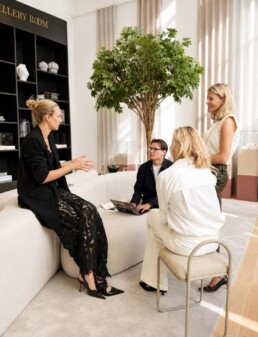
During Copenhagen Fashion Week, dontt.dk met Skriver at The Jewellery Room’s showroom in central Copenhagen, where she joined founders Pernille Møbjerg Knudsen and Charlotte Møbjerg Ansel-Henry to discuss the story behind Josephine Skriver Jewelry, their first collaboration, launched earlier this year.
"It never felt like just another collaboration"
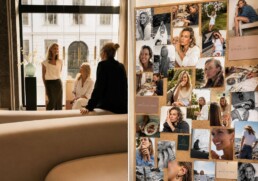
There was a palpable sense of energy inside The Jewellery Room’s showroom in central Copenhagen, where conversations moved effortlessly between the collection, the creative process and the moodboards that helped shape it.
Josephine, Why was The Jewellery Room the right partner for your first jewellery collection?
“For me, it really came down to the people. Sometimes you meet someone and there’s just an immediate connection. I could feel Pernille and Charlotte’s passion from the very beginning, and I already knew how talented they were.
What became clear very quickly was that we shared the same values and the same vision for what this collaboration should be.
We agreed that the jewellery should have character and presence, but it should never be driven by trends. We wanted to create pieces people would wear for years, not something that only feels relevant for a single season. The whole process felt incredibly natural and genuine, and I think that’s reflected in what we’ve created together.
I’m genuinely proud of the collection and I wear the pieces every single day. The result is even better than I ever imagined it could be, and I hope other people will find the same joy in wearing them that I do.”
The collaboration wasn't born out of a marketing strategy
Pernille & Charlotte, What was it about Josephine that made you know she was the right person to create a collection with?
Charlotte:
“We were introduced through a mutual connection, but from that point on, everything moved quite quickly. Just as Josephine said, it all felt very natural from our very first meeting, and we genuinely enjoyed working together throughout the entire process. I think the best collaborations happen when there’s a real connection from the beginning, and that’s exactly what we had.”
Pernille:
“This collaboration didn’t come from a marketing strategy or a plan to work with a well-known profile. It came from a genuine sense that it simply made sense. The Jewellery Room has always been about supporting passionate, talented women who have something meaningful to say and who work hard for what they believe in. Josephine embodied everything we stand for.
Even though the collaboration came together quickly, the process was never rushed. Quite the opposite. We took the time it needed, paid attention to every detail, and were incredibly thorough throughout.”
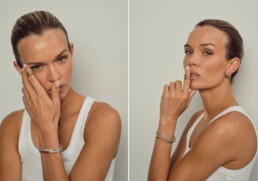
Explore the full collection here.
Charlotte & Josephine, What have you learned from each other throughout this process?
Charlotte:
“I’ve learned just how far you can get by trusting your instincts. When that’s combined with mutual respect – for each other’s perspectives, strengths and the different roles everyone brings to the table – it creates a very special kind of creative process.”
Josephine:
“I completely agree. I’ve honestly never felt this creative before, and I’ve never experienced this level of trust in a collaboration. It really felt like every idea was welcome.
A good example is the hidden details throughout the collection. Every ring has a coloured gemstone on the inside, and together they form a rainbow. To me, they represent the little spark that lives inside all of us, but they’re also a subtle tribute to my own family – what we call a rainbow family in Denmark. Growing up in that environment has shaped who I am in so many ways, and it was important for me that this story became part of the collection as well. Those kinds of conversations require trust, and that’s something I’ve appreciated more than anything throughout this entire process.”
As we sit here in your beautiful showroom and boutique on Bredgade in Copenhagen, where is The Jewellery Room as a brand today?
Pernille:
“We’re constantly evolving and scaling the business. Over the past few years, we’ve placed an increasing focus on international markets, and we’re now seeing real momentum beyond Denmark. Today, we see The Jewellery Room as an established brand in its own right, and that fits naturally with a collaboration like this.
Buying jewellery is ultimately about trust. That’s why we invest so much in the experience we offer our customers – from personal guidance and confidence to the careful curation that sits at the heart of The Jewellery Room. Our ambition has always been to create a platform where the world’s most talented independent jewellery designers can connect with customers across the globe, and that’s a mission we continue to pursue every day.”
More articles like this?
Stay updated on the most exciting stories, tips, and interviews. Sign up for our newsletter and get it all delivered straight to your inbox. Over 60,500 already on the list. We send it once a week!


Copenhagen Fashion Week welcomes a Paris-inspired public spectacle
Copenhagen Fashion Week welcomes a Paris-inspired public spectacle
🇩🇰 Du finder den danske version af denne artikel her.
Next week, Copenhagen will once again become the centre of the Nordic fashion industry as Copenhagen Fashion Week returns with a packed programme of runway shows, presentations and industry events. Designers, buyers, editors and brands from around the world are expected to descend on the Danish capital for the SS27 edition.
This season, however, the catwalk is extending beyond the invitation list.
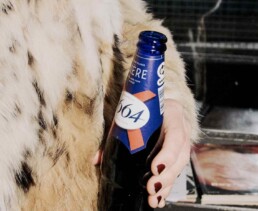
French beer brand 1664 has teamed up with Copenhagen Fashion Week to launch a series of free public screenings of selected runway shows from the official schedule. The concept, which has already gained traction in cities including Paris and New York, will make its Copenhagen debut during this year’s fashion week.
"Public screenings of runway shows have become an increasingly familiar part of fashion weeks in cities including Paris"
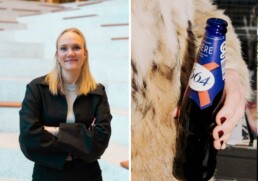
Emilie J. S. Thomas, Brand Manager, 1664
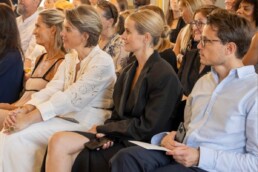
Cecilie Thorsmark, CEO at Copenhagen Fashion Week
"It has the feel of a public screening of a major football match"
Emilie Thomas, Brand Manager for 1664 Denmark, says:
“Everyone talks about Copenhagen Fashion Week, but very few people ever get to experience it from the front row. We wanted to change that by opening up selected runway shows to the public. Two of the screenings will be streamed live, allowing people to experience the shows as they unfold on the catwalk.”
Public runway screenings have become a fixture at fashion weeks in cities including Paris, Marseille, Bordeaux, Lyon and New York, where hundreds – and sometimes thousands of fashion enthusiasts gather in bars and cultural venues to watch the shows together.
Emilie continues:
“The atmosphere is much like watching a major football match on a big screen. You’re surrounded by people who are all there to experience the moment as it happens. The music, a cold beer and the crowd’s reactions turn the screening into a celebration in its own right.”
Cecilie Thorsmark, CEO of Copenhagen Fashion Week, adds:
“We’re delighted to continue our long-standing partnership with 1664, whose distinctive blue bottles have become a familiar part of Copenhagen Fashion Week. With the launch of the 1664 x CPHFW Viewing Party, we’re introducing a new format that gives even more people the opportunity to experience key moments from the official programme and engage with the creativity that defines Copenhagen Fashion Week.”
The event takes place on Thursday 6 August from 14.00 to 20.00 at Niels Hemmingsens Gade 12 in central Copenhagen.
Admission is free and visitors will receive a complimentary bottle of 1664, available with or without alcohol, alongside light snacks.
The programme features one runway show every hour from the official SS27 schedule. Two shows will be streamed live from the catwalk, while the remaining screenings have been curated from the opening days of Copenhagen Fashion Week. Beyond the screenings, guests can expect DJ sets, an exhibition showcasing 1664’s past fashion collaborations and a behind-the-scenes look at how a runway show comes together.
More articles like this?
Stay updated on the most exciting stories, tips, and interviews. Sign up for our newsletter and get it all delivered straight to your inbox. Over 60,500 already on the list. We send it once a week!

Sticks’n’Sushi is growing across every market and closing in on £1 billion in revenue
Sticks’n’Sushi is growing across every market and closing in on £1 billion in revenue
🇩🇰 Du finder den danske version af denne artikel her.
The story of Sticks’n’Sushi began in Copenhagen in 1994, when Thor Andersen and brothers Kim and Jens Rahbek Hansen opened the first restaurant on Nansensgade. The restaurant is still there today and was among the first in Denmark to specialise in sushi.
Today, the group operates more than 30 restaurants across Copenhagen, Berlin, London, Cambridge, Oxford, Manchester and Glasgow.
It was the latter two cities that we reported on a year ago as part of the company’s plans to maintain momentum, with revenue and the bottom line both continuing to move in the right direction.
That expansion, together with the broader development across restaurant dining, delivery, takeaway and catering, helped make 2025 another strong year.
In 2025, Sticks’n’Sushi recorded annual revenue of more than £100 million for the first time, equivalent to DKK 909.7 million, or approximately £100 million, putting the group within sight of the billion mark.
From a Copenhagen restaurant to almost a billion in revenue
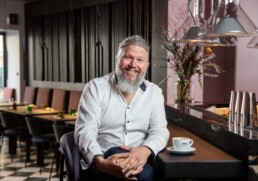
Andreas Karlsson, CEO, Sticks’n’Sushi
Andreas Karlsson, CEO of Sticks’n’Sushi, says:
“2025 was a year of real progress for Sticks’n’Sushi, as we consolidated our performance across our existing restaurant portfolio and took important steps forward in our strategic plan.
Our continued international expansion marks the beginning of an exciting new chapter for the company. Delivering results across all markets and channels while opening new restaurants is something we never take for granted.”
The company reported EBITDA of DKK 70.3 million, while no other financial figures were included in the announcement. The Danish company reported a bottom line of DKK 11.6 million in its accounts.
British investment firm now owns the chain
None of the founders are still involved in the business. In 2024, the chain was acquired by British investment firm McWin Capital Partners from Maj Invest. At the time, the founders held a minority stake in the company.
McWin Capital Partners is a UK-based investment firm founded by Henry McGovern and Steven K. Winegar. The firm has a strong portfolio in the restaurant sector, including Gail’s Bakery, Big Mamma and L’Osteria.
Andreas Karlsson previously spoke about the partnership:
“McWin is an owner that strongly supports us in continuing our growth. My approach is always to open one restaurant at a time and give it the same attention and care as if it were the first restaurant. McWin supports that approach. They care deeply about protecting our values and our DNA.”
More articles like this?
Stay updated on the most exciting stories, tips, and interviews. Sign up for our newsletter and get it all delivered straight to your inbox. Over 60,500 already on the list. We send it once a week!
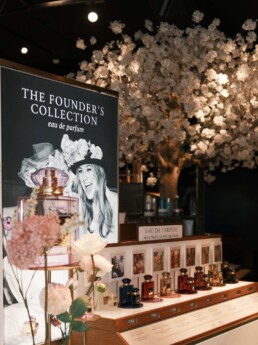
Rituals launches one of Europe’s largest retail transformations
Rituals launches one of Europe’s largest retail transformations
🇩🇰 Du finder den danske version af denne artikel her.
In just 25 years, Rituals has grown from a small Amsterdam basement operation into a global wellbeing and beauty brand with around 1,500 stores across 33 countries.
When dontt.dk previously met CEO and founder Raymond Cloosterman at Rituals’ headquarters in Amsterdam, he shared how the ambition has always extended far beyond products, from investing in initiatives that support young people’s mental wellbeing to creating a positive impact on society.
Now, Rituals is taking another significant step in its evolution, investing €40 million in a major renewal of its European store network.
“It is an investment in the customer experience and in the important role our physical stores play in people’s daily lives”
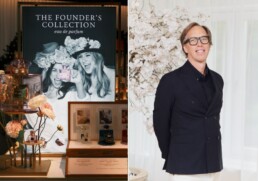
Joakim Klingsell, Managing Director, Rituals Nordics
In short, Rituals is embarking on one of Europe’s largest retail transformations, backed by a €40 million investment. Starting in August, 1,500 stores across 30 countries will receive a new look in just 30 working days – a project that would typically take several years to complete.
The renewal coincides with the launch of a range of new collections, requiring a brighter, more spacious and elevated retail environment. At the same time, the investment underlines Rituals’ continued belief in physical stores as a central part of the brand strategy, at a time when many retailers are shifting more of their focus towards digital.
Gregory Bruyer, CCO & Global COO at Rituals, says:
“The physical stores remain essential in bringing our brand universe to life. What makes this initiative unique is that we are enhancing the experience across 1,500 stores simultaneously. On average, we are renewing more than 40 stores every working day with the support of around 100 teams across Europe. It is an incredibly complex and demanding project.”
Joakim Klingsell, Managing Director of Rituals Nordics, adds:
“We know our stores mean a great deal to our customers across the Nordics. People still want to experience our products in person, receive personal guidance and feel the sense of calm and atmosphere that are such important parts of Rituals. That is why this renewal is about more than a visual upgrade. It is an investment in the customer experience and in the role our physical stores play in people’s everyday lives.”
“We are not building a retail company, we are building a brand”
The next chapter of the Rituals store experience
The stores will take on a brighter and more elevated expression, with an increased focus on the customer experience and product presentation. At the heart of the new concept is Beauty World, where skincare, makeup, haircare and fragrances come together in one central area, giving these categories more space. Collections including Private Home Collection, Homme, Hair Care and Luxury Travel Collection will also receive a more prominent position across the stores.
The investment is a clear statement of Rituals’ continued belief in physical retail. The stores are not only places to purchase products, but spaces where customers can experience the brand through personal guidance, hand massages and a cup of tea, supported by digital services including Click & Collect, Endless Aisle and Ship from Store.
Globally, Rituals continues to open a new store every working day, with a particular focus on Asia, while its digital business now accounts for 20 per cent of revenue. The European store renewal will take place throughout August and September, followed by Asia and the Middle East in the first quarter of 2027.
Raymond Cloosterman, CEO & founder of Rituals, says:
“It has always been my dream to create an international wellbeing brand: an innovative concept within the premium beauty industry, which was the first to combine high-quality products, accessibility and the ambition to make a positive difference. We are not building a retail company, we are building a brand. Our stores have played a crucial role from day one: this is where our vision of luxury comes to life.”
The store renewal follows the principle of “remove, refresh, reuse”, with existing fixtures being reused and new elements designed for flexible use across the stores.
Exclusive interview: Raymond Cloosterman built a global billion-euro business, but it was never about the product
A few months ago, we met with Raymond Cloosterman in Amsterdam for an in-depth conversation about the journey from a small basement operation to a global beauty and wellbeing brand.
He shared the vision behind Rituals, the importance of physical stores and the ambition to create a positive impact beyond products.
Read our full interview with Raymond Cloosterman here.
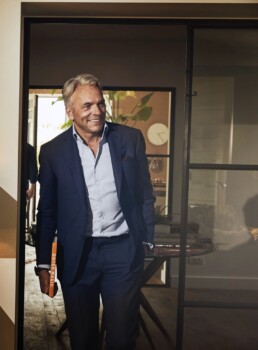
Raymond Cloosterman, CEO & Founder, Rituals
More articles like this?
Stay updated on the most exciting stories, tips, and interviews. Sign up for our newsletter and get it all delivered straight to your inbox. Over 60,500 already on the list. We send it once a week!

Holger Rune joins Danish brand EACE for a new chapter in performance nutrition
Holger Rune joins Danish brand EACE for a new chapter in performance nutrition
🇩🇰 Du finder den danske version af denne artikel her.
From functional chewing gum to a complete performance nutrition range. Danish brand EACE is taking its biggest step yet, expanding its offering with two new products while joining forces with tennis star Holger Rune.
The new collection includes a ready-to-drink collagen shot and creatine gummies, launching ahead of Holger Rune’s return to the ATP Tour following a lengthy injury period. But for EACE, this launch is about more than new products. It marks the company’s ambition to evolve from a brand known for functional chewing gum into a broader player within performance nutrition.
At dontt.dk, we have followed EACE since its early days. For this launch, we spoke with CEO and co-founder Asbjørn Dencker about the company’s evolution, ambitions and the story behind its partnership with one of Denmark’s most prominent sporting figures.
“We discovered that Holger was already using our energy chewing gum before we ever approached him”
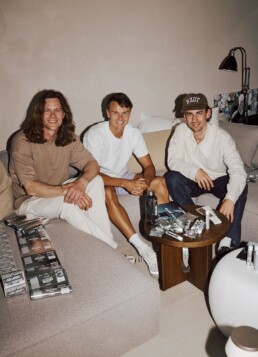
From left: Asbjørn Dencker, CEO & co-founder of EACE, Holger Rune,
and Ziggi Harttung, CMO & co-founder of EACE.
Asbjørn, before we get to Holger Rune, let’s start with EACE. You have been known for chewing gum, but now you are launching several new products. What is behind that decision?
“It has actually been a very natural transition from our functional chewing gum into other performance nutrition products. Our Energy Gum in particular is used by many athletes, including Holger, so moving in this direction felt like a natural next step.
Performance nutrition is a category that is growing rapidly, but we felt there was a lack of transparency. It is almost impossible to find out where many performance nutrition products are actually produced. At the same time, we felt the category lacked convenience. A lot of it is still built around large tubs on the kitchen counter, primarily targeting bodybuilders.
So, in short, we saw an opportunity to contribute with more transparency and create products that are easier to use and appeal more to the modern consumer.
EACE started with a very specific idea: creating a vitamin-infused chewing gum after my mother struggled to swallow pills. We wanted to find a smarter way to deliver nutrients than through traditional tablets. From the beginning, our mission has been to make nutrition easier. Even our name comes from that idea, ‘easy’.
It should be simple. Today, you can actually fit all of our performance products in your pocket.
That is why it makes sense for us to continue building in this direction, and we will be launching more products over time.”
“Our mantra is: ‘Performance is hard. Nutrition shouldn’t be’”
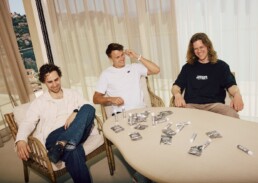
Who are these products made for?
“I actually think it is very much the dontt reader. The active and modern consumer. People who care about themselves and want to become the best version of themselves. Especially those looking to perform a little better in their everyday lives.
EACE is also for people who want products they know the origin of, products they can trust, and products that deliver on their promises.”
Looking ahead, what do you hope people will associate EACE with, now that you are no longer focused on just one product category?
“Our mantra is: ‘Performance is hard. Nutrition shouldn’t be.’
Performing is hard, whether it is at work, in the gym or somewhere completely different. That is the part we cannot make easier.
What we can do is make nutrition as simple as possible. That has been our mission from the beginning, and it does not change just because we are expanding into more product categories.
We will continue to develop products that are easy to carry, easy to use and easy to fit into a busy everyday life. That remains the core of EACE.”
“Our ambitions are significant, both in Denmark and internationally”
How did the collaboration with Holger Rune come about?
“We actually discovered that Holger was already using our energy chewing gum.
So we sent him a classic Instagram DM and asked if we could send him some more products.
In the package, we also included a pitch with a few ideas for a potential collaboration. We followed up afterwards, which led to our first meeting.
We quickly agreed on the direction, and a few months later, the partnership was in place.”
What are the ambitions for the collaboration?
“The ambitions are big, both nationally and internationally. We see this collaboration as a manifestation of EACE truly entering the performance nutrition space. It is going to be a very exciting journey.”
More articles like this?
Stay updated on the most exciting stories, tips, and interviews. Sign up for our newsletter and get it all delivered straight to your inbox. Over 60,500 already on the list. We send it once a week!
How a Danish AI startup is analysing World Cup matches for Portugal
How a Danish AI startup is analysing World Cup matches for Portugal
🇩🇰 Du finder den danske version af denne artikel her.
The Danish AI company Alai has moved quickly from the university startup scene in Aalborg to the international stage of elite football.
Today, its technology is used by the Portuguese national team at the 2026 World Cup, where it supports real-time match analysis from the sidelines.
Alai develops artificial intelligence tools for football performance analysis, allowing coaches and analysts to read the game with greater speed and precision than before.
Founded in 2024 as a spinout from Aalborg University, the company has already processed thousands of professional matches.
We spoke with Mikkel Dalsager Jungersen, co-founder and COO of Alai, about the journey from idea to international breakthrough, how the collaboration with Portugal came about, and where the technology might lead next.
“The close collaboration and rapid development have been key to us now being part of their setup at the World Cup”
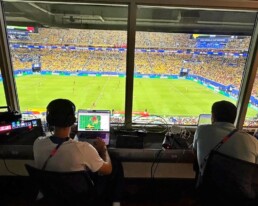
Here, analysts from the Portuguese national team use the Danish AI platform Alai for real-time match analysis at the World Cup.
Mikkel, how did the idea for Alai come about?
“Alai originates from a project at Aalborg University, where we worked with AaB to explore how artificial intelligence could help coaches understand a football match while it is being played.
We quickly realised that enormous amounts of data were already being collected from professional matches, but that much of the analysis was still done manually after the final whistle. That led us to build an AI system that could automatically turn all that information into actionable insights while the game is still in progress.”
“It tracks every player’s movements and automatically identifies situations that may be of interest"

How did you go from a startup in Aalborg to working with the Portuguese national team at the World Cup? How does a deal like that happen?
“It actually started quite simply.
We got in touch with people around the Portuguese national team and took the initiative to start a dialogue ourselves. We showed them the platform, demonstrated what the technology could do, and from there the collaboration developed.
Over the past months, we’ve worked closely with their analysis department. They’ve come with requests and ideas, and our job has been to quickly turn that feedback into new features. That close collaboration and rapid development have been key to us now being part of their setup at the World Cup.”
What can your technology actually help coaches and analysts see or understand faster than before?
“Imagine having to track all 22 players on the pitch at the same time, while also identifying the patterns that emerge during a match. That’s almost impossible for a human to do.
That’s where our AI comes in. It tracks every player’s movement and automatically identifies situations that may be of interest. That could be where a team consistently leaves space, where the opposition repeatedly creates problems, or which tactical patterns keep recurring.
In that way, analysts get a much faster overview and can spend their time evaluating solutions rather than first having to search for the problems”
“We believe that AI will become just as natural a tool in elite football as video analysis is today”
Football is the obvious use case, but do you see Alai as a football company, or as an analysis platform that could eventually be used in other sports and contexts?
“Right now, our full focus is on football. We are already working with some of the biggest clubs and national teams in Europe, and we still see enormous potential in developing the technology further within football specifically.
At the same time, we are building an AI that analyses complex movement patterns in real time. That technology could, in the long term, be applied to other sports and perhaps even other industries. But for now, the ambition is clear: we want to be among the global leaders in AI for professional football.”
When you look three to five years ahead, what is the ambition for Alai? Which markets, customers or opportunities are you aiming for?
“We have already taken the first steps and are currently working with some of Europe’s biggest clubs and national teams. The ambition now is to build on that and make Alai a fixed part of the daily workflow in the world’s top football organisations.
We believe that AI will become just as natural a tool in elite football as video analysis is today. In three to five years, we hope Alai is the platform coaches and analysts open when they prepare for matches or make decisions during games.”
More articles like this?
Stay updated on the most exciting stories, tips, and interviews. Sign up for our newsletter and get it all delivered straight to your inbox. Over 60,500 already on the list. We send it once a week!
Danish TechBBQ brings Europe together to strengthen the startup ecosystem
Danish TechBBQ brings Europe together to strengthen the startup ecosystem
🇩🇰 Du finder den danske version af denne artikel her.
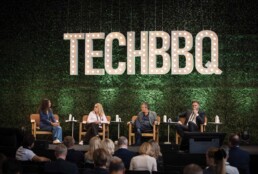
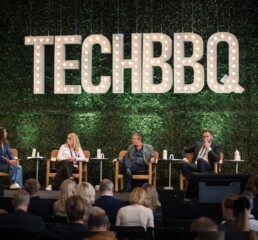
When TechBBQ opens its doors in Copenhagen on 26–27 August, it will once again take place at Bella Center Copenhagen for the second year running. The move marks a continuation of a broader development, as TechBBQ has grown from a compact community event in Copenhagen into an international meeting point for startups, investors and tech profiles from across Europe and beyond.
At dontt.dk, we will be covering TechBBQ more closely this year with a series of previews, interviews and reports from the two days at Bella Center. The aim is to get closer to what actually takes place behind the main stages: the meetings, the investments and the relationships that often emerge away from the official programme.
TechBBQ is the story of an interest that has consistently outgrown its own framework.
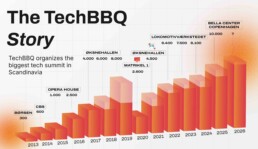
Data from TechBBQ
The move from Lokomotivværkstedet to Bella Center Copenhagen last year quickly proved necessary. Interest had simply outgrown the previous setting, and the 2025 edition marked a significant expansion of the format.
The numbers speak for themselves: from 2013, when TechBBQ gathered 300 people at Børsen, the 2025 edition brought together nearly 10,000 participants, distributed as follows:
2,578 from a startups
282 from scaleups
1,731 investors
1,016 community partners
540 tech talents
350 speakers
160 media representatives
80 diplomats
It is precisely this composition that sets TechBBQ apart from a conventional conference. It brings the entire value chain of the startup ecosystem into one space, from early-stage ideas to capital and scale.
Leading voices & matchmaking
On the speaker side, the 2025 edition also brought a strong international presence to Copenhagen, with names from Nike, The Atlantic, WIRED, BBC, The Economist and TechCrunch, alongside a range of influential voices from media, venture capital and the broader tech industry. Expectations for this year are even higher. Once the full programme is confirmed, we will publish it on dontt.dk.
In recent years, TechBBQ has particularly defined itself through one area: matchmaking. Alongside the stages and talks, it is the structured meetings between startups and investors that carry much of the weight. It is here that thousands of matches are made, and where a significant share of dealflow is, according to the organisers, initiated.
It is precisely this combination that has elevated TechBBQ to an international level: a curated programme, strong global names and an active ecosystem that is not only about inspiration, but about concrete connections and capital. It is this development we look forward to covering in greater depth.
When this year’s edition takes place in late August, Copenhagen will once again become a hub for European startup activity.
dontt.dk will cover TechBBQ in Copenhagen with previews, interviews and reports from one of Europe’s largest startup events.
More articles like this?
Stay updated on the most exciting stories, tips, and interviews. Sign up for our newsletter and get it all delivered straight to your inbox. Over 60,500 already on the list. We send it once a week!
From air monitor to design brand: Birdie enters its next chapter
From air monitor to design brand: Birdie enters its next chapter
🇩🇰 Du finder den danske version af denne artikel her.
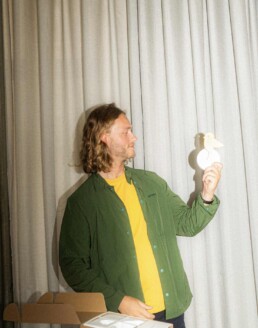
The sensible Danish canary is chirping again. Birdie is expanding its universe with a new range of design objects for the home, following the success of its now-iconic indoor climate monitor. The new collection was unveiled during this year’s 3daysofdesign in Copenhagen.
Since 2022, Birdie’s canary-shaped air monitor has been the company’s sole product. In that time, it has found its way into more than 70.000 homes across over 70 countries, a success that has clearly sparked ambitions for more.
Interest in the new products is already strong. The company raised more than 800,000 US dollars in crowdfunding within the first week of its Kickstarter campaign.
“The aim is to create technology that people genuinely want to live with.”

The new products include Birdie Pro, an evolution of the existing air monitor with app connectivity and smart home integration; Birdie Podium, which reimagines the air purifier as a piece of furniture; and Birdie Flame, an LED candle that can be switched on with a wave of the hand and blown out like a real flame, but without smoke or particles.
Hans Augustenborg, co-founder of Birdie, says:
“Birdie started with a simple idea: to make invisible air quality visible. With this collection, we are taking that idea a step further, evolving from a single product into a broader design brand focused on healthier indoor living. The aim is to create technology that people genuinely want to live with.”
Across the collection, the emphasis is on combining function with design. The idea is for the technology to blend naturally into the home rather than resemble traditional electronic devices.
It is also a continuation of the thinking that led to Birdie’s creation in 2022. At the time, co-founder Hans Augustenborg set out to make it easier to monitor indoor air quality by reminding people of one of the simplest solutions: opening a window.
The collection is expected to launch in November 2026. Birdie Pro is already available to pre-order via the company’s Kickstarter campaign.
Hans Augustenborg, Co-founder Birdie
Why is indoor air quality important?
We spend up to 90 percent of our lives indoors, often in environments where air quality is less than ideal. This can affect our wellbeing and has been linked to issues such as headaches, allergies, asthma, and sleep disturbances.
One of the most effective ways to improve indoor air quality is also one of the simplest: opening a window. Health authorities therefore recommend airing out homes several times a day.
Birdie builds on the idea that something as simple as opening a window remains one of the most effective ways to improve indoor air quality.
More articles like this?
Stay updated on the most exciting stories, tips, and interviews. Sign up for our newsletter and get it all delivered straight to your inbox. Over 60,500 already on the list. We send it once a week!
HAY founders on design, creativity and Copenhagen's evolution
HAY founders on design, creativity and Copenhagen's evolution
🇩🇰 Du finder den danske version af denne artikel her.
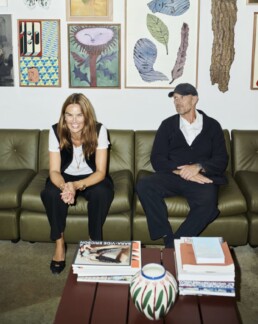
HAY’s influence extends far beyond Denmark. Founded by Mette and Rolf Hay in 2002, the furniture and design company has grown into a global brand with stores across Europe, Asia and the United States.
Now majority-owned by MillerKnoll, the company continues to be shaped by its founders, who remain involved in the leadership and retain a minority stake.
Ahead of this year’s 3daysofdesign, the influential culture and design publication Hypebeast sat down with the couple, opening the conversation with a simple observation: “You can’t talk about Danish design without referencing HAY.”
Mette og Rolf Hay fra HAY
“If you lose your sensitivity to everyday life, you stop seeing what actually needs designing”
They first met as colleagues at the furniture brand GUBI, and in 2002 they founded HAY.
In the interview, Rolf says:
“When we started HAY 25 years ago, it was actually a relatively quiet period in Danish design. At the time, the conversation was still dominated by the Danish mid-century design icons, which left limited room for new designers. Over the following decades, architecture, food, art and design evolved together and transformed Copenhagen into the creative powerhouse it is today. I also think HAY was part of that movement.”
Hypebeast also describes HAY as a company that has helped reshape perceptions of Danish design by making contemporary design more accessible to a wider audience. Today, the brand is represented across much of the world and has become a prominent ambassador for Danish design internationally.
Mette adds that the company’s scale has never changed where ideas come from.
“It is never a forced process for me. Products come to life in the meeting between people, in noticing a gap, in identifying a need for something new. It can be as simple as reaching for a dishcloth and thinking: this could be better, more beautiful, or more joyful. If you lose your sensitivity to everyday life, you stop seeing what actually needs designing.”
“We need people who dare to do things differently”
Mette Hay points out that it is especially the people around her who make Copenhagen such an inspiring city. Friends and creative figures within gastronomy, art and design continuously provide new perspectives and ideas, and she describes the city’s creative environment as both open and generous.
At the same time, she emphasises that inspiration also comes from stepping away from the pace of the city.
“We live outside Copenhagen, and I have really come to appreciate that. When you step a little away from the energy, creativity has more room to grow.”
For Rolf Hay, it is more about the wider creative ecosystem that makes Copenhagen special. He highlights the city’s dense concentration of talent across architecture, graphic design, galleries, hospitality and design as one of its key strengths.
“Copenhagen is right now a powerhouse.”
He adds, however, that this position is not guaranteed. If the city is to maintain its international relevance, it will require continued courage to challenge conventions and explore new directions.
“We need people who dare to do things differently if we want to remain relevant.”
The interview comes ahead of 3daysofdesign, where Copenhagen once again gathers the global design industry. Read here.
More articles like this?
Stay updated on the most exciting stories, tips, and interviews. Sign up for our newsletter and get it all delivered straight to your inbox. Over 60,500 already on the list. We send it once a week!

F.C. Copenhagen and PARKEN replace global spirits supplier with local Danish partner
F.C. Copenhagen and PARKEN replace global spirits supplier with local Danish partner
🇩🇰 Du finder den danske version af denne artikel her.
Although the transfer window has yet to open, things are far from quiet around PARKEN and F.C. Copenhagen.
We can today report that Denmark’s largest venue, PARKEN, is changing its long-standing spirits supplier. The British drinks group Diageo, known for brands such as Smirnoff, Baileys and Johnnie Walker, is being replaced by the Danish company Strandgaarden.
The shift means that visitors will in future be able to enjoy Danish spirits brands such as Bornholm Spirits and CPH Vodka at concerts, football matches and other events at the stadium.
"Bornholm Spirits has been operating at full capacity in recent weeks to keep up with rising demand for its gin"

Kasper Ryttersgaard Jacobsen, CEO and owner of Strandgaarden, says the scale of PARKEN makes the partnership particularly significant:
“With more than one million visitors annually, he highlights the value of both exposure and “brand in hand” visibility. He notes that The Weeknd will soon perform at the venue, with more than 100,000 guests expected in June alone — a scale that, in his words, translates into substantial demand behind the bars.”
Bornholm Spirits, he adds, has been operating at full capacity to keep up with production of gin in recent weeks.
He also points to shifting consumer preferences, with growing demand for organic products, Danish brands and sustainability, while stressing that taste and brand strength remain decisive in certain categories. According to him, the breadth of Strandgaarden’s portfolio was key in securing the agreement.
The range will include brands such as GOAT Gin from Bornholm Spirits, CPH Vodka and Ponyhof. Strandgaarden also holds distribution rights for international labels including Three Sixty Vodka, Le Tribute Gin and Conte Camillo, alongside alcohol-free options via the Monin syrup range.
"Strandgaarden brings a nuanced understanding of evolving consumer trends"
Mikkel Grove Lindsted, Commercial Director at F.C. Copenhagen, adds:
“We gain access to a broad and modern assortment featuring both strong and well-established Danish and international brands.
At the same time, Strandgaarden brings a strong understanding of new consumer trends and innovations in new categories, which many of our fans and visitors are seeking today.”
The agreement has already taken effect and runs until the summer of 2029. It is exclusive within the spirits segment. Carlsberg remains, of course, the main supplier of beer and soft drinks.
More articles like this?
Stay updated on the most exciting stories, tips, and interviews. Sign up for our newsletter and get it all delivered straight to your inbox. Over 60,500 already on the list. We send it once a week!