All Gravy is going global: “You don’t become number one by copying number one”
All Gravy is going global: “You don’t become number one by copying number one”
🇩🇰 Du finder den danske version af denne artikel her.
We’ve been following Jonatan Marc Rasmussen and All Gravy since the Danish startup first began looking beyond its home market. Now, another significant chapter has been added to the story: European tech publication Sifted has ranked All Gravy number 13 among the fastest-growing startups in the Nordics.
Since our last story, its UK business has grown significantly, Germany has joined the picture, its first customers have landed in the US, and the team has doubled in size in just six months.
We sat down with Jonatan to talk about the growth, the international expansion and what comes next for All Gravy.
“Competitors are now launching what we built two years ago.
That’s fine, but you don’t become number one by copying number one”
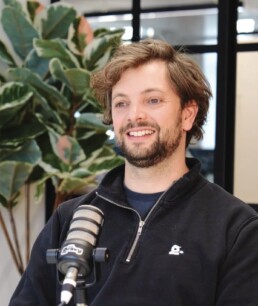
Jonatan Marc Rasmussen, All Gravy
Jonatan, let’s get straight to it. Sifted has ranked All Gravy number 13 among the fastest-growing startups in the Nordics. What do you think you’ve got right?
“First and foremost, we’ve built a product that is 10x better than the products currently on the market for hospitality and retail businesses. They’ve been used to needing six different pieces of software to solve what we solve with one elegant solution, whether you have 20 or 9,000 employees.
We’ve also managed to build agents that make a real difference for our customers, saving HR and operations teams several working days. For example, surveys with 1,000 respondents can now be analysed in 30 minutes instead of two working days. Employee onboarding, including all the administration, contracts and everything else, can be handled end-to-end by an agent instead of a person spending two hours on it. That means the human can spend that time actually saying welcome.
At the same time, we went hard on international expansion as soon as we had something that worked. Our goal isn’t to become the best local burger restaurant. Our goal is to become McDonald’s.”
“The UK is now approaching 70% of our revenue”
The UK now accounts for close to 70% of your revenue. How does the split between Denmark, the UK and your other markets look today?
“The UK is now approaching 70% of our revenue, while a market like Germany is actually growing even faster than the UK did at the same stage.”
How is the product evolving?
“We now have a product and engineering team of 20 people, who can deliver 3–5x more than they could just a year ago because of AI. We completed our 2026 roadmap within the first three months of the year, but that hasn’t made us slow down in any way. If anything, we’ve become even more aggressive about how much value we can create in the product.
Beyond communication, training, engagement and operations, we can now cover the entire employee journey, including scheduling, holidays, contracts and performance reviews.
And perhaps most importantly, we’ve built agents on top of our software. Agents that take responsibility for entire areas of work, such as coordinating new employees, scheduling shifts, ensuring compliance with employment law and much more.
Competitors are now launching what we built two years ago. That’s fine, but you don’t become number one by copying number one.”
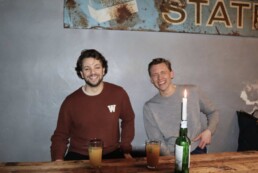
De 2 founders af All Gravy: Jonatan Marc Rasmussen & Kristian Lundager
“Germany came sooner than we expected”
What are the larger British chains seeing in All Gravy and what is making them buy into the platform?
“What is becoming clear to these large chains is that they can bring in a piece of software that solves their biggest headache: people.
We work with industries where people, and their energy and competence, are the product. If you want to grow from 20 to 40 locations, or even from 150 to 250, you simply have to put a stop to the fact that 80% of your employees leave every year. You can’t recruit your way out of that problem. That’s where All Gravy comes in.
The difference between a thriving business and a dying one is simply how good you are at retaining and motivating your employees, as well as your ability to develop them from their first day all the way to becoming a manager. They can see that this is something they can bottle with us, not just a system that can handle large enterprises, but also a system where agents give HR teams the space to work strategically because they are no longer caught up in the increasingly demanding coordination tasks that come with growing a business.”
Last time we spoke, the US was the next step. Germany came first. Why?
“The German market pulled us in. We signed one of the largest chains in Europe, which came to us after its owners had seen us working successfully with several of their English businesses. Afterwards, we realised there is a huge market right next door.
We’ve actually just closed our first five customers in the US. At our size, it’s still an experiment. But it’s one that looks very promising.”
“Our growth in headcount is smaller than our growth in revenue”
You’ve gone from 30 to 60 employees in just six months, with plans to hire another 20 before the end of the year. What is driving such rapid growth?
“We have a market that is practically ripping the product out of our hands, so we are running to keep up. Everyone in the industry in the UK knows us, we are well on our way in Germany, and of course we still have a lot of customers we work closely with here at home.
At the same time, we’ve only just started on our product. That means massively scaling our product team, the team looking after customers, and of course our sales team to meet the demand we are seeing.
Our growth in headcount is smaller than our growth in revenue, precisely because AI has become such an integrated part of the way we work. We can all do more than we could a year ago.
Right now, we’re looking for talented salespeople, designers and developers who are good at working with AI – and, even more importantly, who know how to make it feel as human as possible. For us, it’s about building the most fantastic product experience, whether that product is agents or software.”
If you had to put one headline on All Gravy’s development since our article last year, what would the biggest change be?
“From software to colleague. We are still on the journey, but we have come a long way from being a system that made HR and operations teams more efficient. Today, we deliver agents that can onboard new employees, handle shift scheduling and ensure compliance with employment law.
It’s getting closer to a colleague. And that is the change that has taken us from being a Danish startup with a good idea to becoming the platform some of Europe’s largest chains are building their employee experience on.”
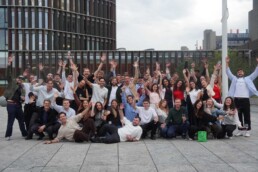
Photo: The entire All Gravy team following the news that they had been ranked 13th on Sifted’s list of the fastest-growing startups in the Nordics.
The growth is impressive, the image quality slightly less so. The excitement, however, is unmistakable.
Three things need to happen
What is the next big goal?
“To become the platform through which frontline employees around the world experience work. At the same time, we want HQ teams to spend their time on value-creating initiatives rather than what unfortunately takes up a lot of their time today: coordinating the many people who move through these businesses every year.
In concrete terms, that means three things: Germany needs to become our next UK. The US needs to move from an experiment to a real market. And the product needs to go from helping people do their jobs to making their jobs better. The 19-year-old starting their first job today should have a better path from their first shift to becoming a manager than anyone has had before.”


Flatpay reaches 2500 employees as its first market turns profitable
Flatpay reaches 2500 employees as its first market turns profitable
🇩🇰 Du finder den danske version af denne artikel her.
Flatpay’s rapid rise has been well documented here at dontt.dk.
Just 18 months into the company’s journey, we sat down with Sander Janca-Jensen, Flatpay’s CEO and co-founder, for an in-depth interview about the company’s ambitions. Even then, the plans were bold. Looking back now, it is fair to say: he was onto something.
Founded in Denmark in 2022, Flatpay set out to challenge the traditional payments industry with a simpler proposition for businesses.
Four years on, the picture looks rather different.
Flatpay now has more than 2,500 employees across seven European markets and has passed the 100,000-customer mark. The company has also reached an important milestone in its growth story: its Danish business is expected to turn an operating profit in 2026.
Finland is expected to follow later this year, Janca-Jensen tells Børsen.
Flatpay now employs more than 2500 people across seven European markets and has surpassed 100.000 customers
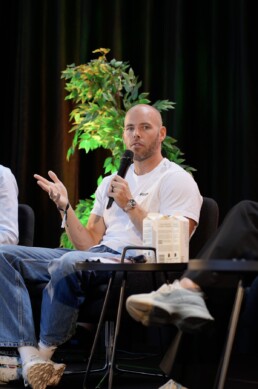
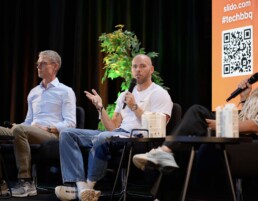
Sander Janca-Jensen at TechBBQ this year
That pace is notable for a company still relatively early in its international expansion. Flatpay has not built its business by cautiously entering one market at a time. Instead, it has pursued growth with an almost uncompromising sense of urgency from the outset.
That approach was underscored in November 2025, when Flatpay raised DKK 1.1bn (€147m) at a valuation of around DKK 11bn (€1.5bn). At the time, the company had approximately 1600 employees.
Since then, its workforce has grown by almost 1.000 people.
1 million customers by 2029
Flatpay has already surpassed 100,000 customers across Europe and has previously said it is targeting 1 million customers by 2029.
It is a growth opportunity the company is investing heavily in, above all, by moving fast.
According to Sander Janca-Jensen, expects to post a loss of around DKK 1bn (€134m) across the group in 2026.
On the face of it, that is a substantial figure. But for Flatpay, it is largely the cost of the strategy it has chosen: investing heavily in international expansion now in order to build a significantly larger business over time.
In that sense, the company is still only at the beginning of the journey that has turned Flatpay into one of Denmark’s most notable fintech growth stories in recent years.

Copenhagen icon Hotel d’Angleterre welcomes new international leader
Copenhagen icon Hotel d’Angleterre welcomes new international leader
🇩🇰 Du finder den danske version af denne artikel her.
Over the summer, Hotel d’Angleterre has welcomed a new leader.
João Prista von Bonhorst has joined the iconic Copenhagen hotel as its new General Manager and CEO, succeeding Lucas Johansson, who has led the property since 2013.
Prista von Bonhorst arrives in Copenhagen with an extensive international career in luxury hospitality. Most recently, he spent six years at Tivoli Hotels & Resorts in Lisbon, where he served as Hotel Manager and General Manager of the historic Tivoli Avenida Liberdade.
Prior to that, he led Lisbon’s renowned Bairro Alto Hotel. His career has also taken him to some of Europe’s most prestigious hotels, including Hôtel Beau-Rivage in Geneva, Four Seasons Hotel Ritz Lisbon, The Bentley Kempinski in London and the iconic Hôtel de Crillon in Paris.
Jeg synes især “arrives in Copenhagen with an extensive international career in luxury hospitality” fungerer godt – det lyder mere editorial end den klassiske pressemeddelelsesformulering.
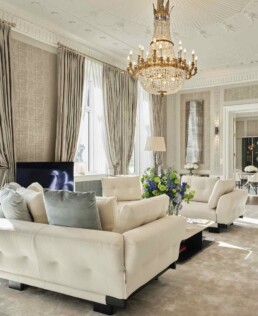
An iconic Copenhagen hotel
As noted earlier, Prista von Bonhorst succeeds Lucas Johansson, who has been a central figure in Hotel d’Angleterre’s recent history.
Johansson led the hotel from 2013 and has now moved on to become CEO of IHA Management, an international hotel management company that counts Hotel d’Angleterre among its clients.
With a history dating back to 1755, Hotel d’Angleterre is one of Copenhagen’s most iconic hotels. The five-star property on Kongens Nytorv has 92 rooms, including 55 suites, as well as the Michelin-starred restaurant Marchal.
The hotel is also a member of The Leading Hotels of the World and has long been an internationally recognised name in luxury hospitality.
Owned by the Remmen family
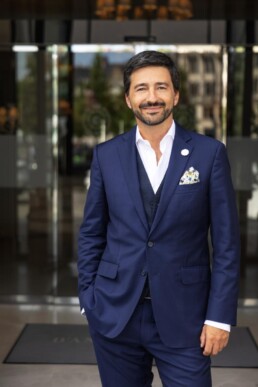
João Prista von Bonhorst
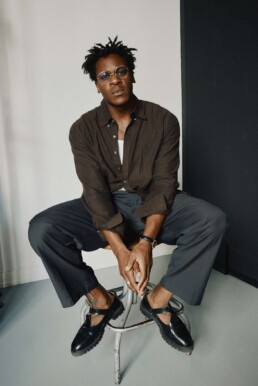
Copenhagen-based VINNY’s adds two new investors as US growth accelerates
Copenhagen-based VINNY’s adds two new investors as US growth accelerates
🇩🇰 Du finder den danske version af denne artikel her.
Things are moving quickly for Copenhagen-based footwear brand VINNY’s. The company grew by an impressive 81 per cent in the first half of 2026, and now it is looking to build on that momentum.
VINNY’s is expanding its ownership with Magnus Neble and Mikkel Rohde, who have already spent the past year working closely with the brand.
Since launching in 2019, VINNY’s, led by founder Virgil Nicholas, has evolved from a Danish label known for its loafers into an international name, stocked by retailers including KITH, Mr Porter and SSENSE.
And its appeal now extends well beyond the traditional fashion crowd. Justin Bieber, Shawn Mendes and King Frederik are among those who have been spotted wearing the Copenhagen-made shoes.
“We have always been focused on building a brand with substance and long-term relevance”
Virgil Nicholas, Founder & Creative Director, VINNY’s
“VINNY’s has established a clear position”
The two new owners are not entering as outside investors, but as existing partners who have worked closely with VINNY’s over the past year.
Magnus Neble and Mikkel Rohde are co-founders of Neble & Rohde, an agency specialising in digital growth, e-commerce and brand development. Neble is also a co-founder of Gastrotools.
Virgil Nicholas, founder and Creative Director of VINNY’s, says:
“We have always been focused on building a brand with substance and long-term relevance. Magnus and Mikkel share our view on how strong brands are built, and we look forward to bringing their expertise into the next phase of the business.”
Magnus Neble adds:
“VINNY’s has established a clear position and a strong international presence through a consistent approach to product, storytelling and community. It is a brand with significant potential, and a partnership we look forward to developing further.”
The next phase will focus on further accelerating VINNY’s direct-to-consumer business, with the US, and New York in particular, showing strong growth over the past year. The investment will help strengthen the brand’s digital platform and its presence in the American market.

Zalando celebrates Scandinavian summer in the streets of Copenhagen
Zalando celebrates Scandinavian summer in the streets of Copenhagen
🇩🇰 Du finder den danske version af denne artikel her.
Zalando, Europe’s leading online platform for fashion and lifestyle, has teamed up with Danish fashion label Samsøe Samsøe on an exclusive collaboration. Together, they have created Summer in the City, a unisex capsule collection and campaign that pairs refined Scandinavian tailoring with a more relaxed street-style sensibility.
The collection comprises 12 styles and is available across all of Zalando’s markets. To put the scale into perspective, Zalando serves 62 million active customers across 29 countries. Copenhagen, however, plays a particularly central role in the collaboration.
The campaign was shot on the streets of Copenhagen, drawing on the rhythm of everyday city life and the small rituals that come with Scandinavian summer, when life naturally moves outdoors and the city takes on a slower, more relaxed pace.
“Working with leading Nordic partners is a central part of our strategy”
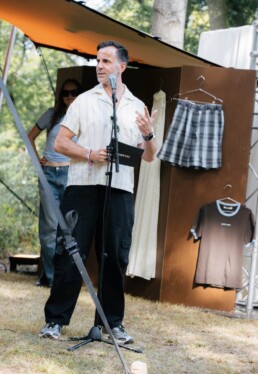
Sebastian Becker, General Manager Nordics at Zalando
For Zalando, the collaboration is part of a broader strategy to work more closely with Nordic brands.
“Working with leading Nordic partners to offer our customers exclusive capsule collections is a central part of our strategy,” says Sebastian Becker, General Manager Nordics at Zalando.
He adds:
“Samsøe Samsøe captures the essence of modern Scandinavian culture like few others. The Corner is the perfect platform to showcase the exclusive ‘Summer in the City’ capsule collection and celebrate the Nordic urban lifestyle, where fashion, city life and festival culture come together naturally.”


Inside the collection
“Summer in the City is inspired by the feeling of spending summer in Scandinavia, where life naturally moves outdoors and the days often stretch well into the evening,” says Marley Roosen, Head of Womenswear Design at Samsøe Samsøe.
The collection is designed as a versatile wardrobe for long summer days and warm evenings in the city. Unisex by design, it centres on relaxed silhouettes that can be styled across genders and occasions.
Key pieces include oversized blazers in grey melange, paired with tailored shorts or miniskirts, zip-up cardigans with contrasting sleeve stripes and relaxed, baggy cargo trousers.
Classic summer references also feature throughout the collection, from checked shirts and matching shorts to vintage-inspired T-shirts, worn-in denim and a colour palette spanning earthy tones, light blue, red, grey and cream.
Copenhagen is more than just the backdrop for the campaign. The city’s urban summer lifestyle also ties into the wider Nordic festival culture, where fashion, music and city life naturally intersect.
That connection was brought to life at Way Out West in Gothenburg, where Zalando presented the collection through The Corner.
The Corner is Zalando’s own physical concept, bringing fashion, music and culture together through live performances, talks, DJ sets and other cultural experiences. The format has also made its way to Copenhagen on several occasions.

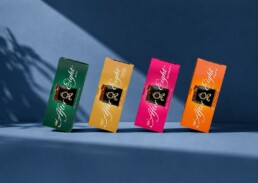
The iconic chocolate brand After Eight launches three new flavours
The iconic chocolate brand After Eight launches three new flavours
🇩🇰 Du finder den danske version af denne artikel her.
Some products are so familiar that we can hardly imagine them changing. After Eight is one of them. For more than six decades, the chocolate brand has been synonymous with its thin mint chocolates, wrapped in their instantly recognisable black envelopes.
Since 1962, After Eight has stayed true to its classic combination of dark chocolate and mint. Now, however, the brand is doing something rather unexpected.
For the first time, After Eight is introducing varieties without mint. The three new flavours each take the brand in a different direction: caramel paired with milk chocolate, orange with dark chocolate, and raspberry with dark chocolate.
"After Eight was developed as an “after dinner” chocolate by Brian Sollit, designed to be enjoyed as a small indulgence after a meal"
“The new design builds on After Eight’s familiar look”
Cecilia Sannig, Marketing Manager, Confectionery Nordic at Nestlé, says:
“After Eight has always been about the small moments we share. With the new varieties without mint, we are opening the brand up to new consumers and giving more people the opportunity to find their favourite, while staying true to the identity and quality that have defined After Eight since 1962.”
After Eight was developed as an “after dinner” chocolate by Brian Sollit at British confectionery maker Rowntree’s and launched in 1962. The idea was simple: a small chocolate to enjoy after dinner, hence the name After Eight. In 1988, Nestlé acquired Rowntree’s, bringing After Eight into its portfolio.
Cecilia adds that the brand is also updating its packaging, with new colours making it easier to distinguish between the different flavours:
“The new design builds on After Eight’s familiar look while giving the packaging a fresh expression. The new colours make it easier to find your preferred flavour, without moving away from the look consumers have known for more than 60 years.”
Danish investment platform Pluto reaches €400m in trading volume and sets its sights on the wider financial sector
Danish investment platform Pluto reaches €400m in trading volume and sets its sights on the wider financial sector
🇩🇰 Du finder den danske version af denne artikel her.
Back in February, we covered Danish investment platform Pluto.markets as it secured €5m in a new funding round. Among the investors were F.C. Copenhagen captain Thomas Delaney and Sander Janca-Jensen, CEO and co-founder of Flatpay.
Now Pluto is taking another significant step forward. The platform was founded by Danish entrepreneurs Oscar Vingtoft and Joakim Brüchmann. Since launching in 2024, their ambition has been clear: to make investing more accessible and intuitive without compromising on functionality.
Today, Pluto has around €400m in assets under management and more than 15.000 users. Until now, the business has primarily focused on private investors. That is about to change, as Pluto opens its platform to businesses, allowing companies to set up investment accounts.
Around 100 companies have already joined during a beta phase, with Pluto now targeting around 1000 business customers by the end of the year. The ambition is for companies to account for roughly half of the platform’s assets under management.
“We want to challenge the wider financial sector”
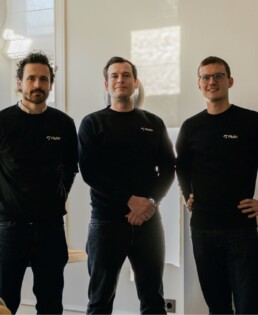
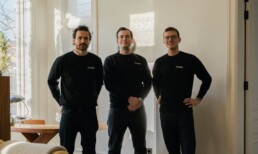
Investor Thomas Delaney (left) with Pluto founders Oscar Vingtoft and Joakim Brüchmann (right)
Speaking to KapitalWatch, Joakim Brüchmann says:
“It needs to go from zero to 50 per cent of the business in five months. That gives you an idea of the level of expectation. A large proportion of the customers we will serve on the business side are already customers on the private side. That makes it significantly easier to sell business accounts when you already serve the customer as a private investor.”
But the bigger story is that Pluto no longer sees itself as competing solely with trading platforms such as Nordnet and Saxo Bank. With its move into the business market, the company is also stepping into territory traditionally dominated by banks and wealth managers.
“What we are trying to do with this launch is challenge the wider financial sector,” says Brüchmann.
Pluto is also setting its sights on customers with more than €67.000 in investable assets. Here, lower fees and technology are set to be among its key competitive advantages.
For businesses, Pluto offers commission-free trading on up to €13.000 per month, as well as Collections, which allows investors to build their own ETF-like investment product.
Technology will play an even greater role going forward
At the same time, Pluto wants to challenge the traditional model of wealth management, where the relationship between client and personal adviser often remains central. In short, the company wants to replace the personal adviser with technology.
And technology is set to play an even greater role going forward. Pluto is working on several new products, including AI features designed to handle parts of the wealth management process for affluent clients. Accounts for minors are also in the pipeline.
And while we are on the subject of ambition: the long-term goal is to become Europe’s preferred investment platform by 2030.

Danish Running Brand SAYSKY & PUMA Go Back to Business
Danish Running Brand SAYSKY & PUMA Go Back to Business
🇩🇰 Du finder den danske version af denne artikel her.
On Thursday, Copenhagen-based running brand SAYSKY and global sportswear giant PUMA will unveil what is expected to be the final chapter of a wide-ranging collaboration that has found its way to runners around the world.
We have covered the partnership before, including a conversation with SAYSKY founder and CEO Lars C. Pedersen about what it means for a Danish brand to earn the recognition of a global player.
“The fact that a brand of Puma’s size recognises that we have something they can use is certainly satisfying.”
Read or revisit our previous story here.
This latest chapter is called Back to Business, taking its cues from runners who carry their passion for the sport into every part of everyday life.
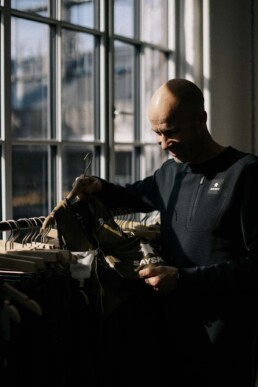
Lars C. Pedersen, Founding CEO, SAYSKY
PUMA: “Running Has Evolved Beyond Sport”
Conor Cashin, PUMA’s Lead Product Line Manager, says:
“Running has evolved beyond sport. It has become a culture, a community and a way for people to express who they are. With Back to Business, we wanted to capture the mindset of runners who organise their lives around the miles that matter most. Together with SAYSKY, we have created a collection that bridges performance and everyday office style, reflecting the way runners move through the world today.”
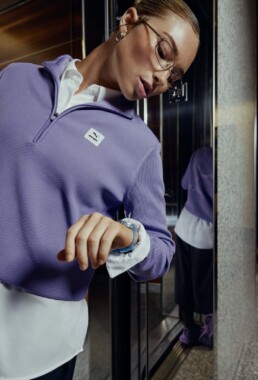
As the imagery suggests, the collection moves between classic office tailoring and a more performance-driven, athletic aesthetic.
For the first time, SAYSKY also brings two familiar PUMA running silhouettes into the collaboration: the PUMA x SAYSKY Deviate NITRO™ Elite 4 and PUMA x SAYSKY MagMax NITRO™ 2.
The collection is completed by a premium range of apparel and accessories, combining business-inspired details with technical materials and functional elements designed for runners moving between work, training and everyday life.
Back to Business launches globally on 20 August at 11am CET, available through PUMA.com and SAYSKY.com, as well as PUMA flagship stores and selected retailers.
The collaboration will also be marked in Copenhagen on 20 August with the Out of Office Relay. For the occasion, an office building will become an unconventional running route, taking participants through elevators, stairwells and parking garages before the evening continues off the clock.

Organic growth has taken SAYSKY from Copenhagen to the world
We previously sat down with Lars C. Pedersen for an in-depth conversation about SAYSKY’s journey, from its early years in Copenhagen to becoming an international running brand with fans, customers and retailers around the world.
Lars spoke about the company’s organic growth, why quality has remained central to the brand, and how SAYSKY has managed to retain its identity along the way.
It offers a closer look at the story behind the brand and the person who has been at the helm since the beginning.
Read or revisit: “Organic Growth Has Taken SAYSKY From Copenhagen to the World” here.
Tivoli’s CEO calls it a historic week for Copenhagen
Tivoli’s CEO calls it a historic week for Copenhagen
🇩🇰 Du finder den danske version af denne artikel her.
It has been a significant week for Tivoli.
On Friday, the Copenhagen institution published its half-year results and maintained its expectations for the remainder of 2026. In short, Tivoli is forecasting revenue of around €187 million and a pre-tax profit of approximately €19 million this year.
The park is also expecting around 4.3 million visitors in 2026, with international guests continuing to account for a growing share of the total. Visitors from the US, Germany and Sweden are among those driving the increase.
Susanne Mørch Koch, CEO at Tivoli
A major investment
Hikari is Tivoli’s own interpretation of a Japanese street, bringing together architecture, light, art, dining and rides in one new setting.
It is also a significant investment. Tivoli describes Hikari as the largest thematic investment in the park’s history, with a three-figure million-DKK sum invested in the project.
When Susanne Mørch Koch became Tivoli’s CEO in 2020, she quickly identified the former Asian-inspired area as one in need of a rethink. Several years later, Hikari is the result.
The new area features three rides, two of them brand new, alongside five new dining concepts, shops, art, scenography and Japanese-inspired architecture.
The two new rides are Hotel Hikari and Tyfonens Øje, while Dæmonen, which has also undergone a substantial scenographic transformation, now runs above the new district as a rollercoaster. Tyfonens Øje is the only ride of its kind in Scandinavia.

The name means light
The name Hikari means “light” in Japanese, a reference that runs throughout the entire area. From neon signs and lanterns to reflections and changing moods, light is central to the experience.
Food is another key part of the new district, with five new dining concepts serving everything from Japanese street food and comfort food to rice dishes and sweets. Two new shops will also offer Japanese snacks, design and ceramics.
With Hikari, Tivoli is not simply adding another themed area. The ambition is to create an entirely new world where Japanese culture and aesthetics meet Tivoli’s distinctive approach to storytelling through architecture, art, food and rides.
Susanne Mørch Koch, CEO of Tivoli, says:
“We have been looking forward to Tivoli’s birthday on 15 August, when this year we are able to give our guests a birthday present that we have been working on for five years. Now we can finally open Hikari; a new universe of rides, including two completely new attractions.
With Hikari, we have taken inspiration from Japan and created our own world of rides, architecture, gardens, art and food experiences unlike anything seen before. Opening on our birthday marks not only a new chapter in our history, but also underlines our ambition to continue developing Tivoli as one of the world’s most attractive destinations, for both Danish and international guests.”
Tivoli’s Birthday
The timing is no coincidence.
Hikari opened on 15 August, Tivoli’s birthday. 183 years after Georg Carstensen first opened the Gardens to the public.
The new district is the culmination of several years of work and one of the largest investments in Tivoli’s history.
It also offers a glimpse into Tivoli’s ambition for the years ahead: to keep evolving the Gardens and creating new experiences, while preserving the qualities that have made Tivoli what it is.
How fashion brands turned Copenhagen into part of Fashion Week
How fashion brands turned Copenhagen into part of Fashion Week
🇩🇰 Du finder den danske version af denne artikel her.
Every August, Copenhagen Fashion Week transforms the Danish capital into one of Europe’s most influential fashion destinations. But today’s fashion week is about far more than runway shows and new collections.
Increasingly, the city itself has become part of the programme, as brands compete to create memorable experiences that live well beyond the catwalk.
For an industry that is one of Denmark’s strongest export sectors, these activations are more than clever marketing. They are an opportunity to build cultural relevance, strengthen brand identity and connect with audiences from around the world.
Here are four brand experiences that caught our attention during this season’s Copenhagen Fashion Week.

By Malene Birger takes over one of Copenhagen's most iconic landmarks
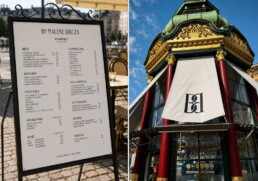
A great brand is about more than a strong collection. It is about creating moments that people remember. This season, By Malene Birger did just that by taking over Taarnet, the historic kiosk in the centre of Kongens Nytorv, one of Copenhagen’s most recognisable public squares.
Once a newspaper kiosk, the small pavilion has been transformed into a fully branded By Malene Birger space. From coffee cups and napkins to menus and curated Copenhagen city guides, every detail reflects the house’s understated aesthetic. Visitors can stop by for a coffee or a beer while taking in one of the city’s busiest meeting points.
The timing also feels significant. Since owner Emilie Martinsen stepped into the role of creative director, By Malene Birger has regained momentum. Her debut collections have been warmly received, and the renewed direction has already translated into positive business results.
More than a Fashion Week installation, the takeover feels like a statement of intent. With late-summer sunshine filling Kongens Nytorv, it was difficult not to see the activation as a brand confidently entering its next chapter.
66°North honours a Copenhagen institution
For more than three decades, STORM was one of Copenhagen’s most influential fashion retailers. The boutique built its reputation on introducing international niche brands to Denmark, securing sought-after collaborations and giving emerging Danish designers a platform long before they became household names. Its closure earlier this year marked the end of an era for the city’s fashion scene.
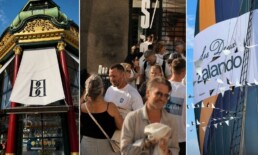
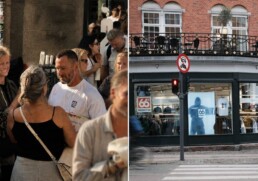
During Copenhagen Fashion Week, Icelandic outerwear brand 66°North began writing the next chapter. With an exclusive STORM x 66°North capsule collection, a full day of events and a street party that drew hundreds of guests, the address quickly became one of the week’s liveliest meeting points.
Rather than feeling like a farewell, the takeover celebrated everything STORM had stood for. Seeing the store’s former owner in the middle of the crowd, dancing in a 66°North T-shirt, made it clear that this wasn’t simply a change of tenants. It felt like a thoughtful passing of the torch – and an encouraging start to STORM’s next chapter.
How Les Deux made Copenhagen its showroom
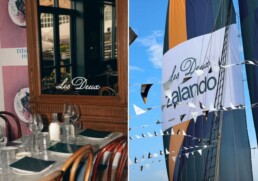
If there was one brand that demonstrated the advantage of playing on home turf, it was Les Deux. The Copenhagen label, which has delivered more than a decade of steady growth, extended its Fashion Week presence far beyond its own showroom. Customers, partners and industry insiders were invited into the Les Deux universe through a series of events across the city.
In Østerbro, the neighbourhood café Bottega Estadio was transformed into a Les Deux destination, bringing together friends of the brand and its local community.
Together with Zalando, Les Deux also hosted one of the week’s larger gatherings at Soho House – complete with a branded boat moored outside – before teaming up with Winston Studio for an open after-work event at its flagship store in Kronprinsensgade, where guests could enjoy fresh fades, drinks and DJs.
Rather than relying on a single headline-grabbing moment, Les Deux built its presence through a carefully curated programme that made the brand feel almost impossible to miss throughout Copenhagen Fashion Week.
ARKK Copenhagen teams up with Alana Hadid
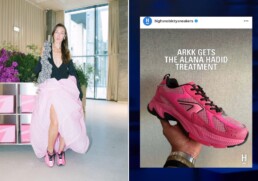
ARKK Copenhagen has been building steady momentum. Following the launch of ARKK Lab, the introduction of its first dedicated running shoe and a broader move into performance footwear, the Danish sneaker brand used Copenhagen Fashion Week to unveil its latest collaboration with Alana Hadid.
The limited-edition version of the popular Forma Runner was developed together with Hadid, who has worn ARKK Copenhagen for years and regularly featured the brand across her social channels long before the partnership became official.
That history makes the collaboration feel authentic rather than manufactured, a natural extension of a relationship that had already been visible to the public.
It is also another sign of ARKK Copenhagen’s growing international ambitions. The collaboration has already attracted attention from a number of international fashion and design publications, further strengthening the brand’s presence beyond Scandinavia.
From trade fair to cultural hub
For years, CIFF was known primarily as Scandinavia’s leading fashion trade show. That remains true today. But under the leadership of Sofie Dolva, it has evolved into something much broader, a platform that inspires, builds communities and increasingly helps shape the wider conversation around fashion.
This season, CIFF extended its presence well beyond the halls of the Bella Center, hosting events, media productions and partnerships across Copenhagen that made it an integral part of the city’s Fashion Week programme.
Among the week’s highlights was the opening event hosted together with PARAISO Miami Swim Week and ELLE Denmark, introducing an international selection of leisure and swimwear brands as part of CIFF’s growing focus on new categories. Another was the early-morning run organised with Boozt, reflecting the fair’s expanding interest in activewear, wellness and the lifestyle increasingly associated with today’s fashion brands.
CIFF is no longer just a place where collections are bought and sold. It has become a platform for ideas, conversations and cultural exchange, one that plays an increasingly important role in shaping both Copenhagen Fashion Week and the city around it.