

JOE & THE JUICE nears 500 stores worldwide
JOE & THE JUICE nears 500 stores worldwide
🇩🇰 Du finder den danske version af denne artikel her.
JOE & THE JUICE is on the verge of a significant milestone: the Danish chain now operates 488 stores worldwide and is fast approaching 500. In the first quarter of 2026 alone, it opened 19 new locations across the US, Central Europe, the UK, and the MENA region – from Los Angeles and New York to Brussels, Reading, Riyadh, and Dubai.
Back in February, we reported that JOE & THE JUICE, in partnership with one of Denmark’s wealthiest families, unveiled ambitious plans for India. This marks the brand’s first major strategic entry into Asia. The Aditya Birla Group, one of India’s largest conglomerates, has interests spanning textiles, cement, metals, telecommunications, finance, and foodservice. Founded in 1857, the group now maintains a global footprint with thousands of employees.
Read more here.
Juicer #2 steps into the role of Chief Culture Officer
“Culture is not something you write on a wall. It’s something people build – year after year.”
That’s how key figures within the company often describe it.
As JOE & THE JUICE continues its rapid global expansion, the brand has also announced a significant internal development. Culture has always been central to how JOE & THE JUICE operates – and it will continue to be.
To formalize this focus, Philip “Pippo” Finsteen, known as Juicer #2 in the company’s history, has been appointed Chief Culture Officer.
Pippo has been with JOE from the very beginning and has played a pivotal role in shaping the culture that defines the brand today. With his new title, culture now has an official seat at the leadership table.
JOE & THE JUICE emphasizes that this is not about changing direction, but rather recognizing the enduring importance of culture – ensuring it remains a driving force as the chain grows worldwide.
More articles like this?
Stay updated on the most exciting stories, tips, and interviews. Sign up for our newsletter and get it all delivered straight to your inbox. Over 60,500 already on the list. We send it once a week!

Danish payments powerhouse Flatpay hits 9,000 new customers in March
Danish payments powerhouse Flatpay hits 9,000 new customers in March
🇩🇰 Du finder den danske version af denne artikel her.
There’s more news from Danish payments firm Flatpay, which continues its meteoric rise. Since its founding in 2022, the company has surpassed a valuation of over DKK 12 billion, is approaching 2,000 employees, and maintains a growth trajectory few can match. Most recently, it secured an additional DKK 1.1 billion in new capital.
The momentum has now been further amplified with the appointment of one of Denmark’s most prominent business figures as chairman: Henrik Poulsen, current chairman of Carlsberg and Færch Group, and former chairman of Novo Nordisk.
All of this is happening at a strategic level, but don’t assume it comes at the expense of day-to-day operations.
“To put it in perspective, we added in a single month what previously took us two full years to achieve”
Sander Janca-Jensen, CEO and co-founder of Flatpay, wrote on LinkedIn that March was an “all-time greatest” month.
He elaborates:
“We broke nearly every internal record, signed close to 9,000 new customers, and set new highs in Germany, France, Finland, the UK, and the Netherlands. At the same time, we rolled out a number of new features, for free and achieved a Net Promoter Score (NPS, a measure of customer satisfaction) of 64 for the product and 67 for customer support. For comparison, it took us 24 months to acquire the same number of customers we gained in March 2026 alone.”
Earlier, in an interview with dontt.dk, Sander emphasized that the company’s culture is its greatest asset: “Our culture is Flatpay’s strongest card.”

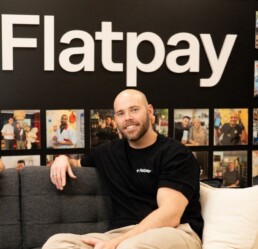
Sander Janca-Jensen, CEO & co-founder at Flatpay
“Flatpay appoints top Danish business leader as chairman”
In February, Henrik Poulsen, chairman of Carlsberg and former chair of Novo Nordisk, was appointed as Flatpay’s new chairman. He sees significant potential in the company’s product and market strategy.
Read more here.
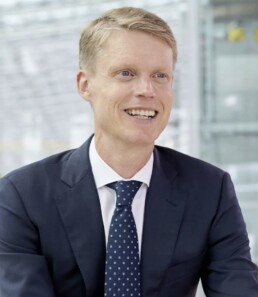
Henrik Poulsen, chairman of Flatpay
More articles like this?
Stay updated on the most exciting stories, tips, and interviews. Sign up for our newsletter and get it all delivered straight to your inbox. Over 60,500 already on the list. We send it once a week!


dontt.dk in London: Robert Pattinson & 1664 challenge good taste
dontt.dk in London: Robert Pattinson & 1664 challenge good taste
🇩🇰 Du finder den danske version af denne artikel her.
French beer 1664 has just unveiled a new global campaign starring Robert Pattinson. The launch took place in London, where the internationally acclaimed actor was on hand to meet a select group of media from around the world.
He kicked things off with an informal Q&A that, despite the often polished nature of such events, felt surprisingly relaxed and genuinely engaging. Afterwards, he remained available for interviews.
Over the past decade, Robert Pattinson has established himself as one of the world’s most influential and commercially successful actors. Most will recognise him from roles in Twilight, The Batman, and Harry Potter.
The campaign draws on a new global study by 1664
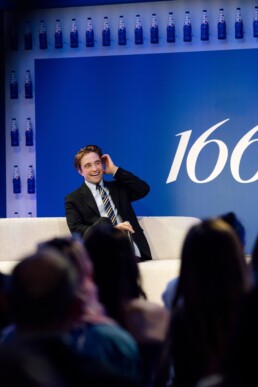
Robert Pattinson
Three personas, three perspectives
The campaign launches today, 1 April, and is built on a new global study from 1664.
Under the title “A Question of Good Taste”, 1664 explored perceptions of taste across Asia, Europe, and North America. The findings reveal a fascinating paradox:
- 83% believe they have good taste
- 87% say taste reflects who they are
- Yet only 31% agree on what “good taste” actually means
The research also highlights growing caution around expressing opinions publicly. In an era of online debate and cancel culture, many feel it can be risky to speak up – even though 77% believe society would benefit from more openness and honesty.
In the campaign film, directed by Brady Corbet, Robert Pattinson takes on three distinctly different roles: a modern minimalist, an avant-garde artist, and an eccentric older dandy.
Set in Paris, the film highlights just how subjective the notion of “good taste” truly is.
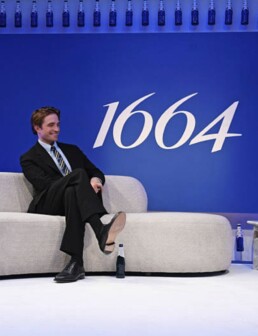
From the London event, where dontt.dk met Robert Pattinson
One of the most talked-about concepts in culture
Robert Pattinson says:
“What really drew me to 1664 was the refreshing, strong sense of style and humour. I enjoyed playing characters with completely different identities and points of view, each convinced they’re right. Taste is such a personal thing – everyone thinks they’ve cracked it. The fun of the film is watching that certainty unravel and explore how subjective Good Taste really is.”
“We’re delighted to have explored how Good taste is one of culture’s most debated concepts with Robert Pattinson. What interested us in this process was not whether people agree, but how strongly they hold their own perspective,” says Seva Nikolaev, Global Vice-President for Premium Brands at Carlsberg, “1664 isn’t here to define taste, but to celebrate the confidence to stand by it. Good taste doesn’t need consensus — it demands conviction.”
More on the campaign, launching today, with Robert Pattinson coverage coming soon on dontt.dk
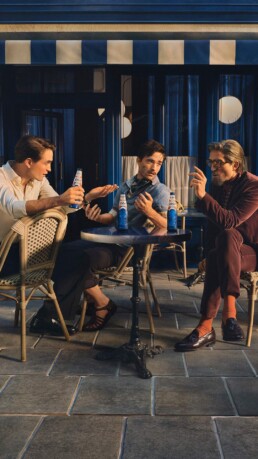
All three of Robert Pattinson’s personas, in one shot!
Want more stories like this?
More articles like this?Stay updated on the most exciting stories, tips, and interviews. Sign up for our newsletter and get it all delivered straight to your inbox. Over 60,500 already on the list. We send it once a week!
Danish AI startup Opally secures major funding to expand across Europe
Opally, the Danish AI hotel platform, raises major investment to scale in Europe
🇩🇰 Du finder den danske version af denne artikel her.
When we last spoke with Gustav Søgård, he had just launched Opally with around 12 hotels. (Read the previous story here.) Just a few months later, that number has grown to over 50, spanning five European countries. At the same time, the product has evolved from a single tool into a comprehensive AI platform covering all guest communications.
As if that weren’t enough, Gustav and Opally have now closed their first investment round, bringing on board prominent figures from both the hospitality and tech sectors—a story he shares in this interview.
We sat down with Gustav Søgård to discuss the rapid growth, the pace of development, and the ambitions driving Opally forward.
“We’re not here to replace the receptionist. Our goal is to give them back the time to focus on what matters most.”
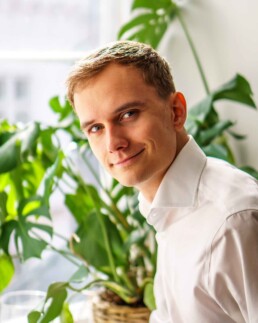
Gustav Søgård, Founder, Opally
Discover the full story behind Opally. 23-year-old Gustav built his own AI tool, and just four months later, hotels are using it daily!
How has it been since we last spoke?
“It’s been a whirlwind. When we last spoke in December, Opally had around 12 hotel clients and a product primarily focused on email management. Today, we’re working with over 50 hotels. Since then, we’ve built an entire suite of tools for hotels.
We’ve launched one of the most advanced AI-driven chatbots for hotel websites, a voice assistant that can take calls on behalf of the reception, AI responses for WhatsApp, Messenger, and Instagram, a tool to help respond to guest reviews, and something we call AI Visibility, which helps hotels appear in AI-powered search engines like ChatGPT, Claude, and Gemini—platforms that are increasingly replacing Google when travellers look for hotels. In short, we’ve gone from a single product to a full platform covering the entire guest communication journey.”
“In other words, we’ve evolved from a single product into a complete platform that manages the entire guest communication experience”
What’s the status on new hotels and markets?
“We’ve expanded from primarily Danish hotels to over 50 hotels across five countries: Denmark, Sweden, Germany, Austria, and Greece. We’re also seeing concrete interest from Switzerland and Norway. What began as a small project on Bornholm has, in less than a year, become a European product.
It’s remarkable to see how universal these challenges are—receptionists in Austria face the exact same issues as those in Skagen.”
How do you balance bringing in new clients while continuously improving the product?
“These two things are inseparable. Every time I speak with a receptionist, I learn something new, which often leads to an improvement shortly afterward. We’ve maintained this close dialogue with hotels from day one.
On the client side, my brother Oliver has joined to help with growth, content, and strategy. We create short videos that show how the product works in practice, which has been a very effective way to reach new hotels. And my mother, Susanne—recently appointed director at Vejrø Resort—has been an invaluable advisor throughout. She understands hotel operations from the inside, and that insight is pure gold when we’re developing new features.”
High-profile investors back Opally
We’re here today because you have some big news. You’ve brought on some high-profile investors?
“Yes, and I’m incredibly proud. We’ve just closed our first angel round with five investors, all of whom have hands-on experience building companies in hospitality, tech, and AI. The lineup includes:
People Ventures, an operational Nordic early-stage VC where Anders Kynde Frederiksen serves as General Partner. Anders is the Co-founder of Planday, acquired by Xero in 2021, one of Denmark’s most successful software exits in workforce management for industries like hospitality. With People Ventures on board, we gain not only access to a powerful network but also hands-on support to scale Opally.
Lasse Kjær, co-founder of Understory, an AI-driven platform helping tour operators and experience-based businesses. Lasse is someone I deeply respect and already collaborate closely with.
Christian Markedal, founder of DigitalGuest, a guest experience platform used by over 500 hotels across the Nordics. He understands the guest journey better than most.
Jonatan Marc Rasmussen, founder of All Gravy, an AI-driven platform for employee experiences in hospitality. He has first-hand insight into staff turnover and employee wellbeing on hotels.
Bjarke Klinge Staun, former Principal at Creandum and an experienced angel investor with numerous early-stage AI and tech investments, including the successful startup Lovable.
Of course, bringing in capital is important, but even more crucial is having these five people on board. Together, they bring deep expertise in the challenges we’re solving. They all know what good hospitality technology should look like.”
“Our primary focus is to become the preferred AI platform for hotels in Scandinavia and to take Europe seriously as our next frontier”
What will the funding be used for?
“The capital and expertise from our investors will be focused on three main areas. First, expanding further across Scandinavia and into the rest of Europe – we already have over 50 hotels in five countries, but the potential is enormous. Second, developing deeper integrations with hotel management systems so our AI can pull even more precise data into its responses.
Third, accelerating product development to roll out new features faster. The investors’ experience directly supports this: Anders knows how to scale software companies, Lasse understands the travel industry, Christian knows the hotel guest journey, Jonatan understands the hospitality workforce, and Bjarke has seen what it takes to grow AI ventures from the ground up.”
Where is your main focus for the rest of the year?
“Our main focus is to become the preferred AI platform for hotels in Scandinavia and to take Europe even more seriously. We will continue refining the core – email, chat, phone, messaging – and enhance integration with hotel systems.
We also have a few exciting projects in the pipeline that we look forward to sharing later this year. But our mission remains the same as day one: we’re not here to replace receptionists. We’re here to give them back the time to focus on what matters most: hospitality.”
Want more stories like this?
More articles like this?Stay updated on the most exciting stories, tips, and interviews. Sign up for our newsletter and get it all delivered straight to your inbox. Over 60,500 already on the list. We send it once a week!

MESSYWEEKEND targets 2000 stockists with new identity
MESSYWEEKEND targets 2000 stockists with new identity
🇩🇰 Du finder den danske version af denne artikel her.
Last time we covered the Danish eyewear brand MESSYWEEKEND, Magasin du Nord had just acquired a majority stake, kicking off what the company called “the next chapter.” The focus: turbocharged international wholesale, the main driver of its double-digit growth, rather than just online as before.
Today, MESSYWEEKEND unveils a refreshed brand identity.
According to the brand, the update introduces a more refined and cohesive creative direction, including a new logo and redesigned website.
Since its founding in 2018, MESSYWEEKEND has grown from a Copenhagen startup to a global eyewear brand present in more than 40 countries.
CEO and founder Mads Koch Pedersen explains:
“With this relaunch, we are setting a clear course for MESSYWEEKEND as a Scandinavian eyewear brand with a strong fashion perspective and global ambitions.”
He adds that the brand expects to announce a series of new partnerships that will expand its reach to over 2,000 stockists worldwide.
New collection launches today
Pssst.
Stay in the loop on the most exciting stories, tips, and interviews. Sign up for our newsletter and get it straight to your inbox. Already 60,500+ subscribers. We send once a week! Sign up here.
Developed by Narrow Creative
The refreshed creative direction will be rolled out across a series of upcoming campaigns, all developed in collaboration with Narrow Creative. The first campaign is set to launch this spring.
Kasper Mølgaard-Nielsen, founder of Narrow Creative, explains:
“For the SS26 lookbook, our goal was to establish a visual direction that elevates MESSYWEEKEND’s brand perception and sets the tone for a new, more refined visual identity – one that feels confident, empowered, and forward-looking.
Our aim is to create a visual universe that positions the brand as a leading player in modern eyewear, while remaining relatable and distinctly Scandinavian.”
At the same time, MESSYWEEKEND is launching a new collection spanning sunglasses, optical frames, sports eyewear, and ski goggles – crafted in materials such as acetate and metal, with a focus on quality, comfort, and technical precision.
The relaunch is now live.

More articles like this?
More articles like this?Stay updated on the most exciting stories, tips, and interviews. Sign up for our newsletter and get it all delivered straight to your inbox. Over 60,500 already on the list. We send it once a week!

The Danish Recipe Behind Norrlyst’s Fastest Michelin Star
The Danish Recipe Behind Norrlyst’s Fastest Michelin Star
🇩🇰 Du finder den danske version af denne artikel her.
41 days. That’s how long it took from the moment Restaurant Udtryk (in Copenhagen) opened its doors until it was awarded its first Michelin star in June 2025.
Behind the restaurant stands Bjarke Just Nielsen and the Norrlyst group, now operating 17 profitable establishments, a notable feat in an industry where even well-established venues struggle with margins.
Yet Udtryk outpaced expectations. We spoke with Bjarke about what the star truly signifies, how to build a Michelin-calibre restaurant at record speed, and how Udtryk fares today, once the initial hype has settled.
Within just 24 hours, the restaurant was fully booked weeks in advance, generating an estimated €1 million in revenue.
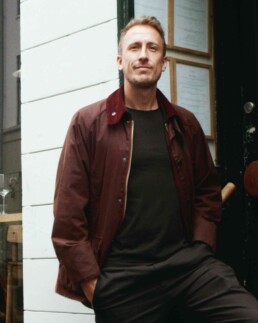
Bjarke Just Nielsen
"Our goal was to create a restaurant at the pinnacle of culinary excellence"
Bjarke, was it an ambition from the start for Udtryk to earn a Michelin star?
“Yes, it absolutely was. From the outset, the ambition was clear: we aimed to build a restaurant operating at the highest level and to secure a Michelin star within two years. Achieving Michelin-calibre standards is always carried by people and strong teams. We had the Norrlyst set-up in place, and then it was about assembling the right team around the project. We’ve often used sports metaphors when talking about these things. In this case, you could call it a double in tennis: we had the foundation, and then it was about putting the right players on the court.”
Can you describe the process in a bit more detail?
“Internally, we knew we could deliver. We are extremely proficient with data and economics, which play a key role in such a set-up. That foundation was built around the team and the organization.
At the same time, it was crucial that the creative direction was sharp from the start. Christian Sommer Ankerlund played a central role in shaping the overall concept, from art and aesthetics to the narrative of the space. It was vital that the room, identity, and gastronomy functioned together as a cohesive whole.
Our ambitions have always been extremely high, and we worked with the goal of ensuring that every guest feels cared for and enjoys a fully rounded experience. We didn’t adhere to specific culinary dogmas; it was a shared ambition to create something that works and delivers both quality and consistency.”
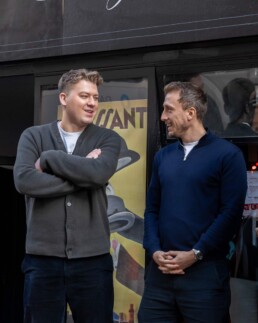
Christian Sommer Ankerlund & Bjarke Just Nielsen
Will there be more stars?
What role did data play in the process?
“It’s the same approach we take every time we open a restaurant within the Norrlyst group. We analyse a wealth of data. In this case, we could see there was room for a counterpoint to how Copenhagen’s restaurant scene was evolving.
As I mentioned earlier regarding our high ambitions, more and more affordable venues were emerging, where price alone was the reason to dine there. We saw an opportunity to communicate and safeguard the overall experience instead, a direct counterpoint.”
Can you describe what a Michelin star actually means in concrete terms?
“From the evening we received the star and for the following 24 hours, we were inundated with inquiries. The restaurant was fully booked well into the future, generating roughly €1 million in revenue. There was, of course, significant PR and exposure. People got to know us through it, and that is very tangible. The knock-on effects also matter for recruitment. Many want to work for those who excel in their craft, and a star acts as a clear seal of approval. Internally, it has also meant a great deal. It’s a star for the entire group and everyone who works here.”
Can you describe what a Michelin star actuaHow is the restaurant doing today?
“We’ve moved past the honeymoon phase, when attention came simply because we existed. That period is over. Now we’re in full operation, which is exactly how it should be. The restaurant remains fully booked. The passion is as strong as ever, and the place is better than it’s ever been.
The star has helped elevate the overall experience. Whether it will lead to additional stars, I don’t know. But I do know the restaurant must continue to evolve.”
Extended Conversation
If you want to learn more about how Bjarke Just Nielsen has reshaped the rules of the restaurant industry, read our previous interview: “In Five Years, Bjarke Just Nielsen Changed the Rules of the Danish Restaurant Scene.” Read it here.
More articles like this?
More articles like this?Stay updated on the most exciting stories, tips, and interviews. Sign up for our newsletter and get it all delivered straight to your inbox. Over 60,500 already on the list. We send it once a week!
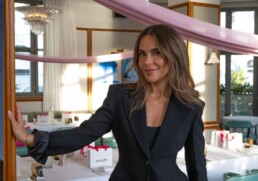
Selima Utsijeva: “It’s no longer about proving myself”
Selima Utsijeva: “It’s no longer about proving myself”
🇩🇰 Du finder den danske version af denne artikel her.
We’ve been following Selima Utsijeva and SMOOTH from the very beginning. We were the first Danish outlet to tell her story — both her journey to Denmark and her ambition to build a beauty clinic with a difference.
SMOOTH has never been “just about appearances.” It has always been about autonomy, awareness, and creating a space where aesthetics and responsibility go hand in hand.
Now, we check in: where does she stand today? What occupies her mind? And how do you dream once you’ve already built something that works?
“We are no longer seen as just ‘beauty girls,’ but as serious players in the health and wellness economy”
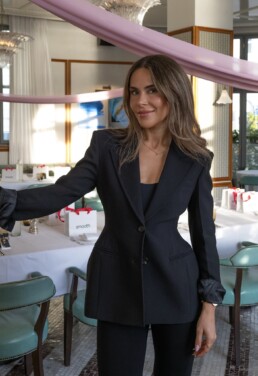
Selima Utsijeva, CEO & Founder, SMOOTH
What occupies your work life the most right now?
“If I’m being completely honest, resilience and stability take up most of my mind.
We had an extremely tough year in 2025 due to regulations from the Danish Patient Safety Authority, which meant we simply couldn’t get our nurses certified and ready quickly enough to treat our clients. The demand was there, but our capacity was locked — and that directly meant we couldn’t generate new revenue. It put immense pressure on the business.
There were moments when I honestly doubted whether we could make it through. Not because we lacked a solid core business, but because liquidity and timing in such situations can become extremely challenging.
But we had a plan. And in times of crisis, having a plan is crucial. We followed it from start to finish and ended the year with a record-breaking Q4, finishing better than expected.
What occupies me now is making sure we never find ourselves that vulnerable again. Building structures, financial discipline, and organizational strength so we can withstand unforeseen regulatory or market changes — especially in a bureaucratic country like Denmark, where regulations often shift rapidly without fully considering industry impact.
I’m thinking less about rapid growth and more about resilience. Right now, the focus is on growth within existing frameworks before pursuing new initiatives or expansion.
For me, this is the next level of leadership.”
“In the past, my dream was largely about expansion and speed…”
Do you dream differently today than you did a few years ago for SMOOTH?
“Yes and no.
I still dream big. But in the past, my focus was largely on expansion and speed. Today, I dream more about depth — about quality, about being the most specialized and respected player, not just the biggest.
I’m thinking more long-term now, prioritizing value creation over volume. There’s a clear three- to four-year plan in place.
And I dream of building something that can stand on its own, even without me in every corner.”
“I am proud”
What fills you with the most pride about SMOOTH?
“That we are still here.
That we built this from the ground up, growing in a fraction of the time that other major players took over ten years. Without investors at the start, without a network, without any safety net. And despite regulatory changes, pressure, and setbacks, we still delivered.
I am proud of our team, and of everyone who stood firm through the tough year of 2025. I am proud that we have shown it is possible to run an aesthetic business both professionally, responsibly, and ambitiously at the same time.”

"Don’t wait to feel ready. You will never be 100% ready"
What motivates you today? Is it the same as when we first met?
“Fundamentally, yes!
In the beginning, SMOOTH was very much about proving that I could. That I could build something on my own, without a network or a traditional background in the industry or academia.
Today, it’s less about proving anything and more about creating something meaningful. I dream of building a company where talented women can fully develop their skills, and where we can help raise industry standards.
The dream is still big, but it’s become more grounded.”
What trends do you see in the beauty and wellness industry right now?
“The industry has grown tremendously in recent years — in some areas 15–20% annually. It’s no longer a niche; it has become a serious part of the health and wellness sector.
This also means that we are no longer seen as just ‘beauty girls.’ We are recognized as serious actors in a sector that has become part of the modern health economy.
At the same time, there is a clear shift from volume to quality. A few years ago, it was about more — more filler, more visible transformations. Today, it’s about skin structure, collagen stimulation, and prevention.
People want to look like themselves. Just fresher.”
If you could give one piece of advice to a young woman starting out, what would it be?
“Don’t wait to feel ready. You will never be 100% ready. You learn by doing. Build it on your own terms. You have to be able to stand strong — even when it gets tough. Because it will.”
More articles like this?
Stay updated on the most exciting stories, tips, and interviews. Sign up for our newsletter and get it all delivered straight to your inbox. Over 60,500 already on the list. We send it once a week!
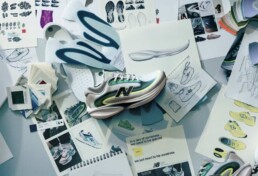
New Balance strengthens its running line with a new everyday model
New Balance strengthens its running line with a new everyday model
🇩🇰 Du finder den danske version af denne artikel her.
When New Balance was founded in Boston in 1906, running shoes were far from its focus. William J. Riley, an Irish immigrant, began the company by crafting arch supports, inspired by the three-pronged balance of a chicken’s foot – hence the name “New Balance.” From the very beginning, the goal was simple: support, comfort, and stability.
Over the decades, the brand has evolved from bespoke footbeds to become one of the world’s leading names in performance and lifestyle footwear.
In 1960, New Balance launched the Trackster, the first running shoe available in multiple widths, and the running boom of the 1970s quickly propelled the brand forward. The rest, as they say, is history.
Now, New Balance is opening a new chapter with the launch of a fresh running model, says Kevin FitzPatrick, Global Vice President of Running at New Balance.
“Crafted to motivate runners, whatever their experience.”
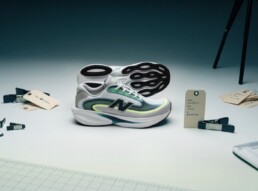

“Designed for the everyday run”
The model is called Ellipse, created with a clear purpose: to help runners lose track of time.
In an era where running is often measured in splits, heart rates, and mileage, the shoe positions itself as the ideal companion for everyday runs.
Kevin FitzPatrick, Global Vice President of Running at New Balance, says:
“Ellipse celebrates all who run – whether taking their first steps or enjoying a recovery run – by offering an exceptionally comfortable and cushioned experience, with a sole designed to protect the body. It is crafted to inspire runners of all levels to get out and enjoy the run.”
At the heart of the shoe is the Fresh Foam X midsole, refined to provide a more responsive and lively feel underfoot. The goal is for it to perform equally well for the novice runner covering their first kilometers, as for the experienced runner enjoying a relaxed recovery session.
The upper is made from what New Balance calls engineered mesh for ventilation, combined with a padded tongue and elastic laces, making it easy to slip on and comfortable to wear – even on days when speed isn’t the priority, which of course happens.
Kevin FitzPatrick adds that Ellipse has already been embraced by figures across sport and culture.
In Denmark, the shoe will be launched on 5 March 2026, with a recommended retail price of DKK 1,200. It will be available, among other places, at the New Balance store on Købmagergade in Copenhagen.

New Balance store on Købmagergade in Copenhagen
More articles like this?
Stay updated on the most exciting stories, tips, and interviews. Sign up for our newsletter and get it all delivered straight to your inbox. Over 60,500 already on the list. We send it once a week!
The Story Behind F.C. Copenhagen’s Partnership with Build-A-Bear
The Story Behind F.C. Copenhagen’s Partnership with Build-A-Bear
🇩🇰 Du finder den danske version af denne artikel her.
The return of the global brand Build-A-Bear to Denmark in 2024 caused quite a stir. Since then, the company has moved quickly, opening a series of stores, most recently a flagship on Købmagergade in Copenhagen. Behind these launches is Morten Geschwendtner and his company, Intersource, a Danish firm that manages a range of international toy rights.
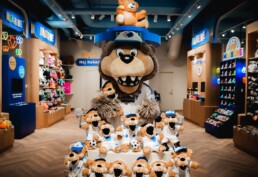
Last week, news broke that the iconic children’s brand had partnered with F.C. Copenhagen, giving the club’s mascot, Leo, a dedicated place in the Build-A-Bear universe – both as plush toys and as part of an accessory collection.
But how does such a collaboration come about, and what does it mean for both the brand and its fans? We spoke with Morten Geschwendtner to get the full story behind the partnership.
“For us, it was an obvious choice to start with the largest football club in the Nordics”
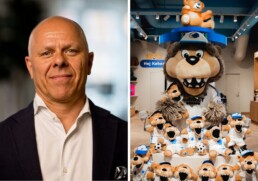
Morten Geschwendtner, CEO & FOUNDER, Intersource
“The concept drew on lessons learned from other markets”
Morten, let’s start with your own “bear career.” You’re the man behind Intersource, which a few years ago secured the rights to Build-A-Bear in Denmark – a major global brand. How did that opportunity come about?
“I’ve been working in the toy industry for nearly 35 years, mainly bringing international concepts to the Nordics. As in many other sectors, a lot comes from the United States.
For a number of years, we’ve partnered with FAO Schwarz – the world’s oldest and largest toy store – and it was through them that we were introduced to the opportunity with Build-A-Bear.
During COVID, Build-A-Bear withdrew from the Nordic region, but we saw potential. So we explored it internally and also approached Salling, a close partner.
That led to a series of shop-in-shops with them, and now our own flagship on Købmagergade.
We’ve also expanded to Norway, Iceland, and six stores in Germany. In Germany, we’re planning at least 20 stores in total. So things have really been moving fast.”
“Købmagergade in Copenhagen has come back to life.”
How has your flagship store on Købmagergade been received?
“Very well. It was a great summer.
Købmagergade has come back to life after a few quieter years. You can clearly see it in the new stores that have opened recently, and with Salling opening nearby soon, the foundations have been solid.
But we’ve also had a strong start ourselves.”
And now we’re here to talk about the partnership you’ve formed with F.C. Copenhagen. How did the idea of integrating F.C. Copenhagen into the Build-A-Bear universe come about?
“It’s a long process. Things take time when you’re working with a global brand like Build-A-Bear. Production alone took nine months from the moment we made the decision together with FCK.
The idea was inspired by experiences from other markets. We knew Build-A-Bear had had success with, among others, Premier League clubs. For us, it was an obvious choice to start with the largest football club in the Nordics. It’s always strongest to start with the biggest.
But generally, we aim to create partnerships within the sport and fashion categories.”
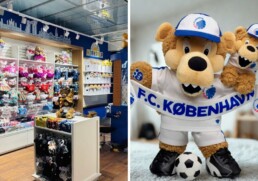
On the left: the store at Copenhagen Airport, where LEO also is available
What’s next for Build-A-Bear collaborations?
What made F.C. Copenhagen the obvious match, beyond their size?
“There were some clear alignments. Over the past few years, they’ve done a great job bringing the FCK brand further into the city. That journey is something we can actively be part of with our store at the airport and here on Købmagergade.
It was also an opportunity to do even more with their mascot, Leo, which is iconic for FCK fans. It certainly deserves a quality plush toy.
They’re constantly working to make attending a match an experience – also for the children in the family stand. And creating experiences is a big part of what entering our universe is all about.”
How has it been received?
“We’ve had fantastic reactions and sales have been satisfactory. So now it’s just about building on that.
It’s not a deal that runs for 14 days, but for years. We’ll be involved in many activations to ensure it stays relevant and exciting. Again, at Build-A-Bear, it’s all about experiences.”
Could you do a similar partnership with other clubs?
“Absolutely. We’re already well into discussions with a few clubs at home and nationally, primarily where we already have a presence.
And since we also hold the rights in Germany, we’re exploring opportunities there as well. As I said before, sport and fashion have always been interesting for our experiential universe.”
Vis dette opslag på Instagram
Video from the launch event
More articles like this?
Stay updated on the most exciting stories, tips, and interviews. Sign up for our newsletter and get it all delivered straight to your inbox. Over 60,500 already on the list. We send it once a week!
JOE & THE JUICE partners with India’s elite for ambitious expansion
Danish café brand JOE & THE JUICE partners with India’s elite for ambitious expansion
🇩🇰 Du finder den danske version af denne artikel her.
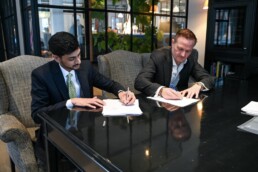
JOE & THE JUICE continues its international growth journey. Over the past months, the Danish café brand has steadily announced new collaborations with high-profile brands and personalities. This week, one of its most strategically significant agreements came to fruition: JOE & THE JUICE has partnered with one of India’s largest conglomerates, Aditya Birla Group.
At its core, the deal represents a long-term investment in a new market. The ambition is to open up to 90 stores across India, without committing to an aggressive rollout. The approach is measured and deliberate.
It’s worth noting that these stores are not included in JOE & THE JUICE’s global target of 1,000 locations by 2028.
This partnership offers a closer look at the brand’s expansion plans and introduces a new collaborator — one of the world’s wealthiest and most influential families.
“We see India as a pivotal market in our long-term growth strategy”
Aryaman Vikram Birla, director of Aditya Birla Management Corporation Private Limited
& Thomas Noroxe, CEO of JOE & THE JUICE
First major entry into Asia
The new partnership marks a significant milestone in JOE & THE JUICE’s remarkable growth. It represents the brand’s first genuine strategic foray into Asia.
Aditya Birla Group is one of India’s largest conglomerates, with operations spanning textiles, cement, metals, telecommunications, finance, and foodservice. Founded in 1857, the group today has a global footprint employing thousands of people.
The company is owned by the Aditya Birla family, one of the country’s most prominent business dynasties.
The timing of the agreement comes shortly after a new EU–India trade deal, which JOE & THE JUICE views as a favorable development for market access and long-term opportunities.
Thomas Noroxe, CEO of JOE & THE JUICE, says:
“We see India as a pivotal market in our long-term growth strategy and are proud to partner with Aditya Birla Group on this journey. This marks JOE & THE JUICE’s first genuine strategic foray into Asia, in a market experiencing rapid development, where consumer preferences are evolving quickly, particularly towards premium and health-focused offerings.
With Aditya Birla Group’s strong operational capabilities and proven experience in building and managing premium lifestyle brands, we have an ideal platform to launch and scale JOE & THE JUICE.”
"We believe that JOE & THE JUICE is uniquely positioned at the convergence of health, convenience, and experience"
We also received a statement from Aryaman Vikram Birla, director of Aditya Birla Management Corporation Private Limited and founder of ABNAH. He explains:
“India is at a pivotal moment in terms of consumption, driven by structural tailwinds such as rising discretionary spending, favorable demographics, and the shift towards premiumisation. The Aditya Birla Group has been expanding across a diverse range of consumer businesses, including fashion and lifestyle, food services, jewellery, paints, and digital-first brands. Anchored in deep insights, category expertise, and operational efficiency, the Group is well positioned to develop and scale differentiated brands for India’s aspirational consumers.
We believe that JOE & THE JUICE is uniquely situated at the intersection of health, convenience, and experience. It aligns perfectly with our hospitality strategy and provides a strong foundation for scalable formats.”
More articles like this?
Stay updated on the most exciting stories, tips, and interviews. Sign up for our newsletter and get it all delivered straight to your inbox. Over 60,500 already on the list. We send it once a week!