

Maiken Paaske aims to connect the world’s most remarkable outliers
🇩🇰 Du finder den danske version af denne artikel her.
Maiken Paaske is back as a founder, this time with Abeam, a network for “outliers.” These are the people who build extraordinary companies, shape investments, and drive innovation across borders and continents.
The platform brings together unicorn founders, top investors, and executives seeking meaningful connections, free from the noise of social media and unsolicited requests. For Maiken, it has always been about people, technology, and the opportunities that come from connecting the world’s most exceptional talent. We spoke with her about the vision behind Abeam, what drives her, and what Denmark could learn from the international tech scene.
Here is our creator interview with Maiken Paaske.
“We bring together the pioneers who are shaping the future in one place”
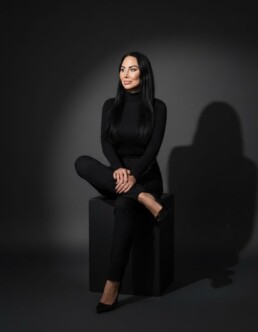
Maiken Paaske
Maiken, you’ve just launched Abeam. What is it all about?
“I would describe Abeam as ‘The home for outliers.’ It’s where the top founders, investors, executives, and leaders come together.
In venture capital and tech, the term ‘outliers’ usually refers to the 1% of people who do something truly exceptional—those who build extraordinary companies, create thousands of jobs, deliver significant returns to investors, and drive societal growth and innovation.
I think that term fits Abeam’s users perfectly. These are people who have had exceptional journeys and dared to do what very few would. Think unicorn founders, executives from public companies, top investors, founders who have made major exits, and so on.
We bring together the pioneers shaping the future in one place, enabling them to connect across countries and continents.”
“In short, you could say it’s like ‘Raya for business”
What problem are you trying to solve with Abeam?
*”In short, you could say it’s like ‘Raya for business.’ That might give some context.
Abeam exists to bring together people who can’t—or don’t want to—use platforms like LinkedIn, but still want to connect with relevant, like-minded individuals wherever they are in the world.
The people Abeam targets generally fall into two groups: some are extremely private, while others are very well-known.
The well-known are constantly bombarded with requests. Everyone wants something from them. Their LinkedIn inboxes are full of messages, but rarely are they meaningful or balanced.
On the other hand, there are the highly private individuals—those who aren’t active on social media and rarely appear in the press. They want to stay under the radar and avoid constant solicitations, but they still want to meet and connect with peers of similar caliber.
Abeam brings these ‘outliers’ together across the globe, allowing them to discover relevant people nearby. They can also join curated group dinners with others at their level and gain insights, advice, and support from people who truly understand them, because they see themselves reflected in one another.”*
What are your short- and long-term ambitions?
“The goal is to create the infrastructure that connects the world’s top outliers, enabling them to form relationships and alliances that can generate massive impact—for themselves and for the rest of the world.”

“Technology has always been a passion and a central interest of mine”
You’ve moved between startups, investing, and advisory work. When do you feel most in your element?
“From the outside, it might seem like there’s a big difference between them, but I don’t feel that way. I feel like it all connects and overlaps. The common denominator in everything I do is people. I truly enjoy working with inspiring individuals who have something meaningful to say, who don’t just follow the crowd, but dare to take risks, carve their own paths, and think outside the box—those who shape the world and drive us forward.
They give me energy! That includes both the clients in my advisory business, where I do thought leadership and PR for top founders, venture funds, and executives, as well as the same audience that uses Abeam. So, in reality, there isn’t that much distance between the different activities. It all blends together—in a good way.”*
And yet, you’ve also participated in many debates and knowledge-sharing sessions around technology, entrepreneurship, equality, and diversity. What drives you the most?
“Technology has always been a passion and a central interest of mine. It has shaped my education, my hobbies, and my career. I’ve always seen technology as a cornerstone of society and the future. If you want to be where decisions are made, where a lot is at stake, where you can have influence and shape the future, you need to understand tech. And many other factors intersect with that.
Investing is also a big part of the picture—venture capital gives new innovations a chance, which is why I’ve been involved in it. Beyond that, it’s primarily men who hold power in tech and investing today, so there’s clearly room for more diversity, especially if we want a future that reflects a diverse society. And I’ve always believed you can’t talk about business without talking about politics. Politics is in everything—especially when it comes to tech and investments—because there’s so much power and influence involved. So, in short, I feel it all connects and overlaps.”
"People have mixed opinions about Elon Musk, and he’s controversial in many ways"
Where do you think Danish founders have the most potential, and where are we still falling behind compared to the international tech scenes you follow?
“It’s funny—when I’m in the U.S., people think I’m so humble, but in Denmark, people see me as very ambitious and standing out. It’s fascinating how differently you can be perceived in these two places, and it probably says something about the differences between the markets. I think the ‘Jante Law’ still holds too much sway in Denmark.
It permeates our communication and culture—often unconsciously. Our discourse shapes our reality, whether we like it or not. As a result, ambition suffers, and it affects our ability to build companies here. Most people don’t dare to think REALLY big.
They’re afraid to stand out. They’re afraid to take risks. And honestly, the incentive to risk everything to build a company—where 95% fail within five years—is very low here. We’re so comfortable in Denmark: good salaries, security, a healthy work-life balance. We could learn a lot from Americans when it comes to generating excitement around entrepreneurship. They’re much better at hyping their founders, and that hype translates into real results. Entrepreneurs, investors, and the broader public get excited about new ideas. At first, it’s just hype, but over time it turns into real value. That’s exactly where Denmark is lagging.”
Who inspires you personally?
“People have mixed opinions about Elon Musk, and he’s controversial in many ways. But when it comes to entrepreneurship, there’s really no one at his level.
The problems he tackles are extraordinarily complex. He innovates critical infrastructure—not just with one company, but with many: PayPal, Tesla, SpaceX, Neuralink, Boring. It’s infrastructure for the future of civilization. He doesn’t do it once—he does it in parallel, simultaneously—and with great success.
So yes, Elon inspires me. Not because I want to be like him, but because he’s living proof that anything is possible. And at its core, entrepreneurship is exactly that: seeing the world as it could be and building the solutions that make that vision real.”
“A good workday is varied, yet carefully structured”
What does a good workday look like for you?
“It’s varied, yet carefully structured. I work a lot, but I feel free because I have the flexibility to plan much of it myself. I start my day reading the news, listening to podcasts, and getting in some morning exercise. I always prioritize deep work in the morning when I’m most productive, working with full focus.
Afternoons are usually filled with meetings and lighter, more flexible tasks. But I’m also the type who is always a bit ‘at work.’ If I get a good idea at 11:30 p.m. while falling asleep, I’ll grab my notes app and write it down so I can act on it the next day. My mind is always partially at work, full of ideas. I find it incredibly exciting.”
WEEKLY BRIEF
Culture, business & inspiration — straight from Copenhagen to your inbox. Join over 55,500 subscribers! We send out updates once a week.
